A complete bulk DDR5 RAM inquiry gives the supplier a separate specification and quantity for every line, the intended platform or compatibility scope, sample requirements, and a defined quotation basis. These inputs help prevent repeated questions about capacity, kit contents, profile settings, packaging, and delivery.
Use the six sections below to prepare a first RFQ for OEM/ODM DDR5 desktop memory. A copyable template appears in “Submit a Complete RFQ.” Technical approval and commercial agreement remain later steps: the initial request should identify what is required, what is undecided, and what the supplier needs to propose.
Use one line per distinct saleable configuration. If the part number is known, provide it in full with the revision or approved specification where applicable. If a model has not been selected, provide the required fields and ask the supplier to nominate an exact SKU. A selection request is valid; an ambiguous mixture described as one product is difficult to quote accurately.
| SKU field | What to specify |
|---|---|
| Identity | Buyer line ID and full part number, or required specification for model selection |
| Module format | DDR5 desktop UDIMM and the required memory class |
| Capacity | Capacity per module, modules per kit, and total kit capacity |
| Operating target | Required data rate, default/profile condition, and any project-specific electrical or timing requirements |
| Appearance | RGB or non-RGB, color, and any required dimensional limit |
| Quantity | Quantity for this SKU, explicitly in individual modules or complete kits |
| Alternatives | Whether a proposed alternative is allowed and which fields must remain fixed |
A kit containing two 16GB modules has a different unit of sale from one 32GB module. The quotation should identify whether its unit price is per module or per kit. Keep sample quantities separate from the first production order, and split quantities by color or packaging when those options create different SKUs.
For private-label projects, identify the branding scope at the start: module label, logo, retail box, barcode, inserts, or carton marks. Ask which changes are available and separately priced. Do not assume that hardware design work, profile changes, or other engineering customization is included with a label request.
Attach the CPU, motherboard model and revision, BIOS version, intended slots, and module count for known system programs. State the target running setting. A rated frequency and successful first boot do not establish the same acceptance result.
Separate default operation from XMP or EXPO operation. If the deployment requires a rate without enabling a performance profile, say so. If profiles are permitted, specify the relevant platform and request the proposed model's actual default and profile data. The XMP and EXPO purchasing guide explains the conditions behind that field.
A distributor buying for open-channel stock may not know every end-user motherboard at first contact. State that the platform list is not yet fixed, identify the intended channel, and request the supplier's documented support scope and configuration limits. Do not turn an unspecified platform requirement into a claim of compatibility with all systems.
For fixed-platform orders, use the DDR5 UDIMM compatibility checklist to collect the host fields. Keep one platform ID for each configuration and reference that ID from the relevant SKU lines.
State the sample quantity by SKU, shipping destination, required availability date, and the tests expected from the supplier and buyer. Ask the quote to identify sample charges, shipping charges, and any conditions for a later credit if one is offered. Sample cost treatment should be confirmed rather than assumed.
Describe the acceptance items: identity and capacity, default and target running settings, boot behavior, memory stability, and the representative workload. Provide the test method, duration, and pass criteria if they are already defined. Otherwise, request a proposed plan and identify who will approve it before testing.
Ask how the sample will be linked to an offered part number and revision. If a pilot lot is required, give its proposed quantity or request a proposal, the confirmation steps before volume release, and the responsible buyer contact. Clarify whether production timing depends on sample acceptance, artwork approval, payment, or other agreed inputs.
The first RFQ needs the sample terms and approval gates, not a completed approval record. Detailed golden-sample acceptance remains a separate workflow. A sample pass also should not be used to imply that an unspecified production alternative has been accepted.
Send the same quantity and configuration basis to each supplier. When a quotation proposes a deviation, keep it visible as a different offer. Do not compare a bare module price with a retail-kit price without resolving the package contents and included services.
| Commercial field | What the response should make clear |
|---|---|
| Currency and price unit | Currency, unit price per module or kit, quantity basis, and line total |
| Trade basis | Requested or proposed trade term, named place/port, and applicable rules version where used |
| Included costs | Packaging, freight, insurance, taxes/duties, testing, setup, or other charges included or excluded |
| Quote validity | Expiry date and any conditions affecting price or availability |
| Minimums | MOQ and ordering increments by SKU, color, kit, or package as applicable |
| Lead time | What event starts the clock and whether the date means dispatch or arrival |
| Payment | Payment schedule, method, currency, and any separately disclosed charges |
| Changes and alternatives | Which specification or quantity assumptions differ from the request |
If Incoterms are used, identify the selected rule, named location, and edition. A three-letter term alone leaves the quote basis incomplete. Destination and dispatch timing should also be written separately so a factory-ready date is not mistaken for the date the buyer receives the goods.
A forecast can help the supplier understand the program, but distinguish it from the quantity actually being requested. For this first inquiry, provide the first-order quantity and label any forecast as indicative. Frequency assortment planning and rolling replenishment belong in a separate supply discussion.
No MOQ, price, payment arrangement, freight service, or lead time in this checklist is a JUHOR offer. Actual terms must be returned in the formal quotation and resolved in the order confirmation.
Describe how the modules will be sold, transported, and received. State whether the request is for bulk protective packaging, individual retail units, or packaged kits. Identify ESD protection, mechanical protection, carton quantities, barcode fields, serial/lot identification, and destination-language requirements where they matter.
Label artwork can follow later, but the first inquiry should state whether custom labels or boxes are required. Ask for a packaging proposal, proofing process, charges, and any effect on minimum quantities or timing. Do not treat all custom packaging as included in the module price.
Ask how service stock and failures will be handled. If spare modules, replacement kits, or an advance-replacement option are needed, request them explicitly. For RMA, ask about required failure information, return destination, authorization, shipping responsibility, assessment, replacement or credit, and the applicable warranty terms.
Traceability requests should identify the records the buyer needs, such as SKU/revision, serial or lot IDs, shipment references, and agreed test evidence. Ask what is available and in what format. The RAM manufacturer evaluation guide adds supplier-level questions for programs requiring deeper process review.
Copy the fields below into a message or requirement sheet. “Required” means the field needs a value or an explicit status for the first inquiry. Where a detail is undecided, write “supplier proposal requested” or “pending platform selection” and state the constraint. These are suggested buyer fields, not a claim that every supplier uses the same form.
Company and contact: [company, contact name, reply email].
Channel and target market: [importer/distributor/system program/private label; countries or regions].
RFQ reference and requested reply date: [buyer reference; date or timing status].
Destination: [country and delivery city/postcode; full address if needed for freight pricing].
Delivery window: [required dispatch and/or arrival window; identify which].
Line ID and product: [full part number and revision, or desktop DDR5 UDIMM specification for selection].
Capacity and package: [GB per module; modules per kit; total kit capacity; individual or matched-set supply].
Operating target: [data rate; default-only or permitted profile; additional technical constraints if any].
Appearance: [RGB/non-RGB; color; branding scope or supplier-standard options acceptable].
Order quantity: [quantity; explicitly pieces or kits; first order separate from any forecast].
Platform reference: [CPU, board/revision, BIOS, slots/module count; or platform-selection status and requested support scope].
Sample requirement: [quantity by line, destination, required date; or state whether a supplier sample proposal is requested].
Test/approval requirement: [acceptance items, responsible contact, buyer test plan or request for supplier proposal].
Pilot requirement: [required quantity and release gate, not required, or proposal requested].
Commercial response: [requested currency; price unit; preferred trade basis or supplier proposal; MOQ; increments; validity; lead-time basis; payment terms].
Packaging and service: [bulk/retail/kit format; custom-label status; traceability; requested spares/RMA requirements].
Known module datasheet, approved part list, or existing-module label photographs.
Detailed platform matrix, BIOS settings, QVL extracts, or prior test reports.
Logo, label artwork, barcode specification, box drawing, or carton requirements.
Indicative forecast, target budget, and planned certification/document requests.
Optional files can become required before technical approval or production release, depending on the project. Ask the supplier to return a line-by-line response marked confirmed, proposed alternative, deviation, or pending verification. A substitute should identify which fields changed rather than appearing as an unexplained replacement part.

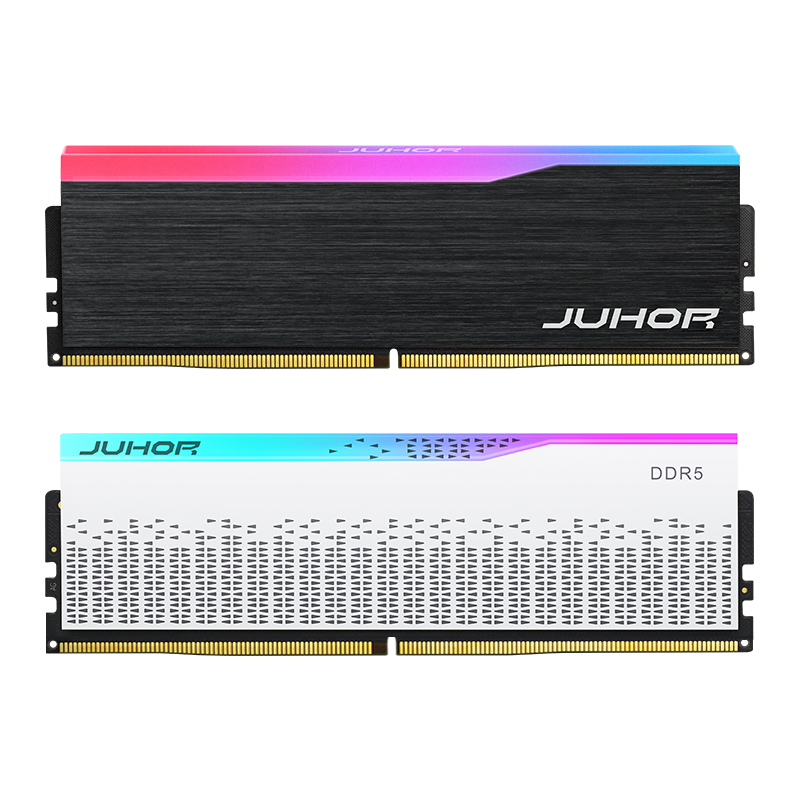
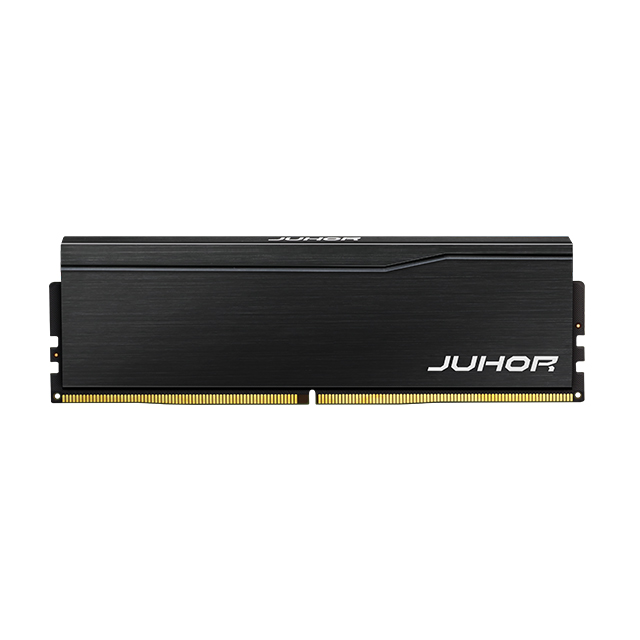
JUHOR desktop DDR5 reference image. The quote should identify the actual ordered SKU, kit contents, and packaging.
Yes. Provide the required format, capacity arrangement, operating target, appearance, quantity, and platform scope, then request a model proposal.
State it explicitly for every line and ask the supplier to use the same price unit. Keep modules per kit and total kit capacity visible.
If it is unknown, state that status and request documented support coverage. Fixed-system orders should include the actual CPU, board, BIOS, and layout.
Do not assume inclusion. Ask the quotation to identify sample, packaging, freight, and setup charges separately where applicable.
Use the formal quote for the actual SKU, quantity, packaging, and approval conditions. General website information may describe a different order basis.
The same technical configuration, quantity unit, packaging, evidence requirements, currency, trade basis, cost inclusions, and timing definition.
No. The RFQ requests an offer. Technical acceptance, deviations, commercial terms, and release conditions still need agreement.
JUHOR lists an OEM/ODM DDR5 desktop memory product that can be used as a starting point for a model inquiry. A catalog page does not establish current stock, a complete capacity/frequency matrix, or project-specific commercial terms.
Send the company/channel details, SKU sheet, quantities, platform information, sample requirements, destination, and delivery window. Request a formal quotation that identifies the offered part numbers, specification deviations, sample and production conditions, packaging, and service scope. That gives both teams a clear record for the next technical and commercial review.


4 / F, No. 18, Langkou Industrial Park, Langkou Community, Dalang Street,Shenzhen,Guangodng , China