A DDR5 RAM QVL entry supports the configuration described by its publisher. For a bulk purchase, the approval record must also identify the actual motherboard, BIOS, module part number, revision, installed population, and operating settings intended for shipment. Those identifiers define what the buyer has accepted and make later changes reviewable.
This article is for procurement managers and brand quality teams reviewing compatibility evidence for desktop DDR5 UDIMMs. It explains how to assess a DDR5 qualified vendor list, handle gaps, and turn sample results into a bounded approval. Basic product selection and the wider golden-sample release process remain separate tasks.
A qualified vendor list records components that its publisher has tested with specified systems or configurations. A motherboard manufacturer's list starts from a particular board; a memory manufacturer's list may start from a particular module or kit. Record which organization published the evidence and what product it is describing.
QVL formats vary. Some identify module capacity, kit part number, supported slot population, operating rate, or BIOS. Others expose fewer conditions. An omitted field is unknown evidence, not permission to assume every possible value. Save the relevant document or entry with its source URL, document date where supplied, and retrieval date.
ASUS's QVL guidance provides filters including vendor, size, speed, socket support, and type. A published NZXT DDR5 QVL also separates RAM speed from supported speed and includes a BIOS column. These examples show why a reviewer should examine the actual entry and column definitions rather than retain only a screenshot of a vendor name.
A QVL should not be extended into claims that it covers every CPU, every board revision, all BIOS releases, additional modules, or later material changes. It also does not by itself establish the buyer's application acceptance result or the consistency of every production lot. Where a tender explicitly requires a listed part, record that requirement separately from engineering's assessment of an unlisted candidate.
Place the supplier's proposed specification beside the QVL record and compare them field by field. Use the full part number, including meaningful suffixes and revision identifiers. A shared family name or a matching capacity-and-speed label cannot establish an exact match.
| Evidence field | What to compare | How to record a gap |
|---|---|---|
| Publisher and platform | Motherboard/system model, hardware revision, and applicable CPU grouping | Identify any difference from the shipping platform |
| Module identity | Full module or kit part number and revision where available | List unmatched suffixes or revisions for supplier explanation |
| Capacity | Capacity per module and total kit or system capacity | Clarify the publisher's capacity-column meaning |
| Population | Modules tested, socket support, and intended installation slots | Separate untested two-/four-module or mixed-kit layouts |
| Operating rate | Rated rate versus the supported or tested rate shown | Do not replace a recorded lower rate with the product's headline rating |
| Settings | Default or profile operation, and visible electrical/timing conditions | Mark unspecified settings as unknown |
| Firmware | BIOS version or other conditions actually identified by the source | Request clarification or qualify the production version |
| Source control | URL, file/version date, entry, retrieval date, and reviewer | Retain the accessible source and document any unavailable original |
Read socket-support markings using the publisher's legend. Do not assume a mark for two modules qualifies four modules, or that a capacity field means the whole kit rather than one module. A listed kit is also not evidence for two separately purchased kits installed together.
If the offered product carries a private-label part number, ask for a controlled mapping to the tested configuration. The supplier should explain the relationship and any technical differences. An upstream part's listing should not be copied onto another SKU without that traceability.
Product-selection checks should already have established the correct DDR5 UDIMM type and host requirements. Use the DDR5 UDIMM compatibility checklist for those inputs; this review decides what the resulting evidence actually supports.
DDR5 RAM not on a QVL is not automatically incompatible. It may not have been tested by that publisher, or the available list may not include the relevant product. Equally, an unlisted part is not approved simply because another part from the same series appears.
Classify the review as an exact visible match, a partial match with identified differences, or no usable entry. Keep a technical blocker separate: an incompatible module class or an unsupported capacity does not become acceptable through an extended stability test.
For a partial match, list the differences before deciding on supplemental testing. Examples include a different BIOS, module revision, capacity, profile, or number of installed modules. A color suffix may be cosmetic, but that equivalence should be documented rather than assumed. Missing CPU or BIOS information remains a limitation even when the visible part number matches.
Request another relevant source where available: a memory-vendor compatibility record, a supplier's configuration-specific report, or clarification from the board vendor. Record its provenance. A supplier test report can support the buyer's engineering decision; it does not create a motherboard-vendor QVL entry or satisfy a contractual listing requirement by itself.
The next step for a technically eligible but unqualified candidate is a defined test plan. Assign an owner and acceptance criteria rather than marking it passed or failed from list membership alone.
Build rows around the configurations that will ship. Include the exact CPU, board revision, production BIOS, target memory SKU/revision, total capacity, module count, and slots. If several boards or approved firmware versions will be used, identify which rows have evidence and which still require testing.
Separate default operation from the target setting. If a performance profile is involved, record the selected profile and actual running parameters. A result at defaults should not be described as validation at the advertised profile rate. The XMP and EXPO evidence guide explains that distinction.
| Test group | Record | Acceptance question |
|---|---|---|
| Identity and detection | Sample IDs, SKU/revision, detected capacity, module count, SPD capture | Is this the product and layout under review? |
| Default configuration | BIOS settings, cold boot, restart, required sleep/wake behavior, test logs | Does the approved baseline operate correctly? |
| Target configuration | Profile/settings, measured rate, memory-test tool/version, duration, errors | Does the requested operating setting pass the agreed test? |
| Application validation | OS/image version, representative workload, conditions, completion and error records | Does the system meet the intended application requirement? |
| Result and disposition | Pass/fail criteria, deviations, evidence IDs, reviewer and date | What can be approved, and what remains pending? |
Set methods and thresholds before testing. Specify workload, duration, environmental conditions, sample selection, and the treatment of errors. There is no universal duration or sample count that proves compatibility across every DDR5 deployment. Avoid presenting one short successful run as comprehensive qualification.
Classify failures so they can be investigated: no detection, failed training, rate fallback, test errors, or application instability. If a lower rate passes, retain it as a separate result. A deviation from the requested setting needs an explicit disposition before shipment.
Link the report to identifiable samples and the supplier's controlled specification. Record module serial or lot IDs, the applicable BOM or configuration revision, PCB/SPD revision where relevant, and any approved alternatives. These identifiers establish which physical and programmed design the test represents.
The approval record should name an approver and define the authorized shipping configurations. Useful fields include an approval ID, product revision, platform rows covered, allowed BIOS versions, module count, operating settings, report references, open deviations, and date. “Compatible” on a quotation is too broad to replace that record.
Use clear dispositions such as approved for named configurations, pending specified tests, or not approved for the requested setting. If an exception is accepted, state its boundary and owner. Do not extend a pass on one board to another board that has not been covered by the evidence or an explicitly justified equivalence review.
This is the qualification scope associated with a sample revision. Artwork, packaging, visual inspection, and the wider golden-sample approval workflow should remain in their separate release record, with the qualification approval referenced rather than repeated.
Agree a change-review process before repeat orders. The supplier needs to know which changes require notice, and the buyer needs a responsible reviewer who decides whether document review, focused regression, or broader qualification is necessary. The following is a suggested buyer review framework, not a claim about a supplier's existing policy.
| Change | Review focus | Record before release |
|---|---|---|
| CPU, motherboard model or hardware revision | Whether the original platform evidence applies | New matrix row or documented equivalence rationale and test scope |
| BIOS update or settings change | Memory training, defaults, profile behavior, and affected functions | Release-note review, selected regression tests, result and approver |
| Capacity, module count, slots or target rate | The changed operating population | Updated configuration and qualification result |
| DRAM organization, key components, PCB or SPD/profile programming | Impact on the tested module design and settings | Supplier change notice, revised identity, and justified retest plan |
| Administrative label/document change only | Whether technical identity is genuinely unchanged | Traceable mapping and documented reason for the selected review level |
A BIOS change does not automatically require every original test to be repeated, but it should not inherit approval without review. Save the change description, affected configurations, assessment, tests selected, results, and release decision. Unexplained substitutions should remain pending until their impact is resolved.
Keep the earlier approval rather than overwriting its history. The new record should show which revision supersedes it and which shipments or platform configurations it authorizes.
No. Review the conditions the publisher actually provides and qualify the BIOS versions included in the buyer's shipping scope.
No. It lacks that listing evidence. Check technical eligibility and define supplemental evidence or testing before approval.
No. A family may include different capacities, organizations, profiles, or revisions. Match the complete identity.
Not automatically. The module count and socket-support conditions must match the intended population or be separately qualified.
Record the field as unknown. Seek clarification or qualify the actual production configuration rather than inventing the missing test condition.
No. It is a separate evidence source. Preserve its author, method, configuration, and limitations when reviewing it.
The buyer should assign a responsible technical or quality reviewer and document the decision, evidence, and release scope.
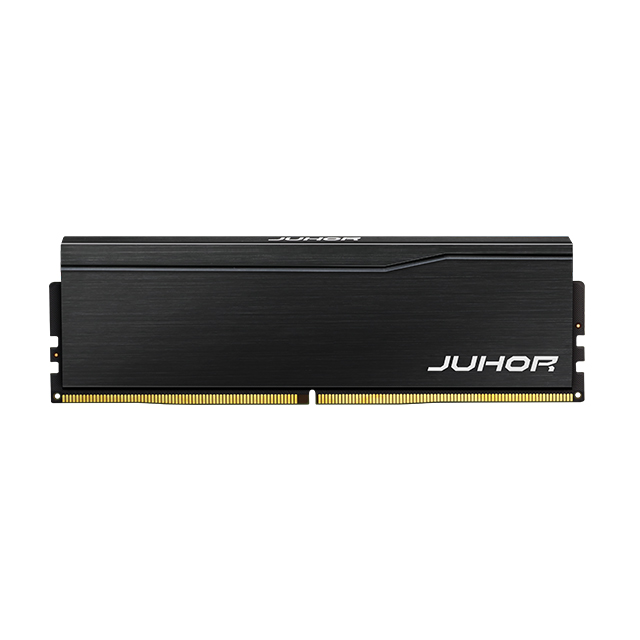
JUHOR lists an OEM/ODM DDR5 desktop memory product that can be used to start a base-UDIMM inquiry. A product page does not establish motherboard QVL status or prove the target platform has been tested.

JUHOR DDR5 desktop reference image. Qualification must identify the actual submitted SKU and revision; the image is not QVL evidence.
Submit the motherboard and revision, CPU, BIOS, target SKU, module count and slots, required rate, and acceptance items. Include any QVL entry or partial match already located. Ask JUHOR which configuration-specific test materials and sample identities are available, which conditions remain untested, and what supplemental review can be proposed.
Keep the reply linked to the buyer's matrix and approval ID. A useful outcome is a traceable agreement on the sample revision, platform scope, required tests, and conditions for release.


4 / F, No. 18, Langkou Industrial Park, Langkou Community, Dalang Street,Shenzhen,Guangodng , China