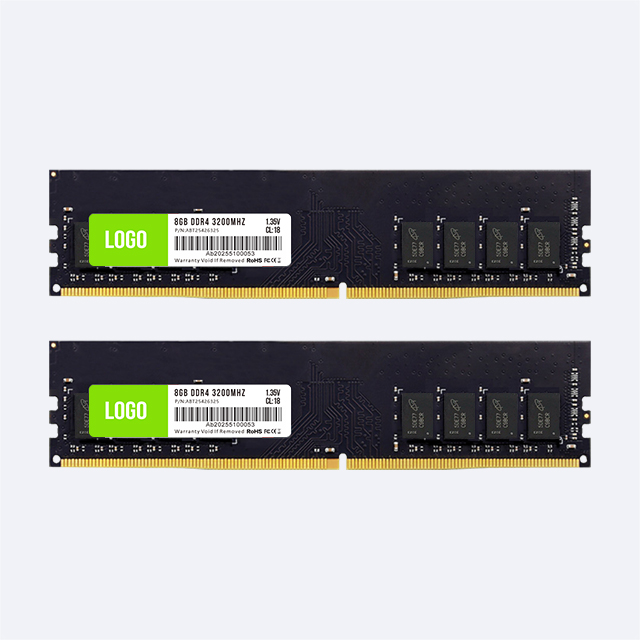
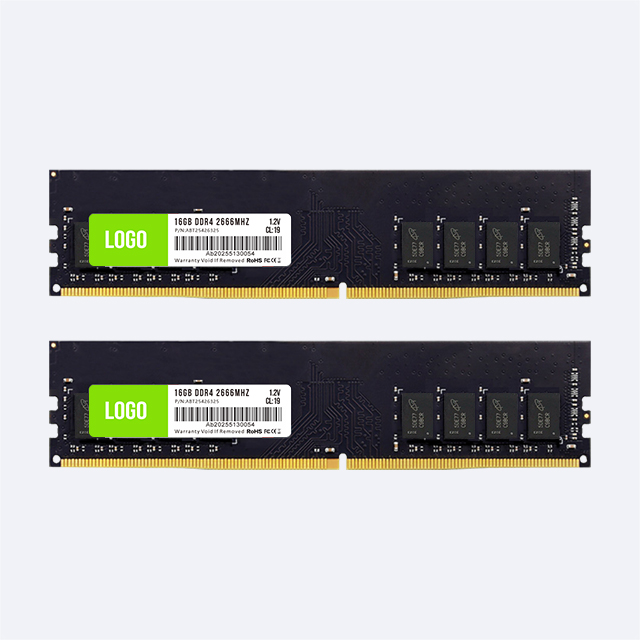
A gaming memory range can lose money even when every module works. The problem is often the product mix: too many RGB colors, capacities, and speeds split demand across slow-moving SKUs, while a limited standard DDR4 range misses value builds and replacement orders. For a brand or distributor, the useful question is not whether rgb ram ddr4 looks better. It is where RGB helps a system sell, where standard DDR4 is the safer commercial choice, and how many variants the channel can support.
For most mixed gaming channels, the practical starting point is a two-tier line. Use standard DDR4 as the volume base for value systems, upgrades, and price-sensitive tenders. Add a focused RGB range for visible gaming builds and retail bundles. Expand colors, frequencies, or heat-spreader designs only after sales data proves demand.
RGB DDR4 adds a light bar, lighting electronics, and a visual identity to the memory module. Standard DDR4 may use a plain PCB or a non-lit heat spreader. Both can be sold in gaming PCs, but their commercial roles differ.
RGB is easiest to justify when the memory is visible through a glass side panel and the buyer treats appearance as part of the PC specification. It gives a gaming brand another design element for product photos, store displays, livestreams, and themed builds. Standard DDR4 fits systems in which the chassis hides the module, the buyer compares total system price, or the order is driven by repair and compatibility.
Lighting does not determine memory performance. Capacity, data rate, timings, voltage, module count, memory-controller limits, and profile settings do. Two modules with the same capacity and advertised speed can still have different profiles or component layouts, so brands should qualify each part number as a separate product.
| Decision factor | RGB DDR4 | Standard DDR4 |
|---|---|---|
| Best channel role | Visible gaming builds, DIY retail, themed systems, premium bundles | Value gaming PCs, upgrades, repair stock, hidden-chassis systems |
| Main buying reason | Appearance plus the required memory specification | Specification, compatibility, availability, and system cost |
| SKU pressure | Higher because color, light-bar design, capacity, speed, and kit format can multiply variants | Lower when the range is limited to core capacities and speeds |
| Extra validation | Lighting behavior, software detection where claimed, color consistency, sleep and restart behavior | Electrical compatibility, stability, thermals, and identification data |
| Sales risk | Paying for visual features in channels that do not value them | Weak differentiation in appearance-led gaming retail |
Carry RGB DDR4 when the finished PC is sold as a visual product. Boutique builders, gaming brands with glass-panel cases, and distributors serving DIY stores can use lighting to create a clearer step-up tier. The memory should match the case, fans, cooler, and motherboard rather than appear as an isolated feature.
RGB is also useful when a private-label brand needs stronger shelf recognition. A distinct heat spreader and light bar can help separate the premium line from a basic range, provided the visual design is consistent across packaging, product photography, and actual production units.
The category still needs discipline. A black and a white version can double inventory before capacity and frequency are counted. Adding single modules, dual-module kits, several speeds, and several lighting designs creates many part numbers. A channel should start with the combinations its systems already use, then widen the range from sell-through data rather than catalog size.

Standard DDR4 is the better base line when customers buy against a system budget, service contract, or compatibility list. It suits value gaming desktops, internet café replacements, refurbished PCs, office-and-gaming hybrid systems, and repair channels that need broad utility from a small stock pool.
It also makes sense when the case has no window or the complete PC already has enough lighting. Removing RGB from memory can leave more budget for capacity, storage, cooling, or the graphics card. For distributors, standard models are easier to share across gaming, commercial, and upgrade accounts.
“Standard” should not mean an uncontrolled generic part. Each SKU still needs a defined capacity, speed, voltage, module format, profile behavior, component policy, label, and test plan. If a supplier can change the bill of materials, the purchasing agreement should state which changes require notice and revalidation.

A compact good-better-best structure is easier to buy, explain, and replenish than a long list of overlapping modules.
| Tier | Suggested role | Product direction | Primary accounts |
|---|---|---|---|
| Core | Volume and service coverage | Standard DDR4 in the capacities and speeds used by the channel's installed platforms | System integrators, repair channels, value gaming builders |
| Step-up | Visible gaming systems | RGB DDR4 in one main color and a limited set of matched kits | Gaming brands, DIY retail, online resellers |
| Special edition | Campaigns and themed builds | Alternative color, heat-spreader design, or private-label presentation after demand is confirmed | Brand launches, limited bundles, selected distributors |
For example, a channel that mainly sells mainstream dual-channel gaming PCs may begin with one standard 16GB or 32GB system configuration and one RGB equivalent. This does not prescribe a universal capacity or frequency. The correct combination must follow the target CPU, motherboard, BIOS, workload, selling price, and local demand.
Keep single modules and matched kits separate in the SKU system. A 16GB kit made from 2 x 8GB modules is not the same product as one 16GB module. State total kit capacity, module count, capacity per module, advertised data rate, operating voltage, and profile requirements on the label and quotation.
A fair RGB-versus-standard comparison holds the memory specification constant. Compare the same total capacity, number of modules, speed, timings, voltage, and test platform. If the RGB model has a different performance profile, any benchmark difference cannot be assigned to the lighting alone.
The CPU memory controller and motherboard determine which DDR generation and memory settings can be used. A module sold at a higher speed may start at a safer default setting until its performance profile is enabled. The final operating speed also depends on BIOS support and the specific CPU-and-board combination. Brands should publish tested configurations instead of implying that one rated speed will run identically on every DDR4 platform.
For performance-oriented DDR4, ask whether the quoted setting uses a standard profile, an XMP profile, or manual tuning. Record the default boot behavior and the steps needed to reach the rated setting. JUHOR's RGB DDR4 product page lists 3200MHz and 3600MHz options at 1.35V and states that products above 3000MHz support XMP 2.0. The exact order specification should still be confirmed before production.
RGB light bars and heat spreaders can make a module taller than a plain design. Validate clearance under large air coolers and in compact cases. Use drawings and physical samples rather than relying on product photos.
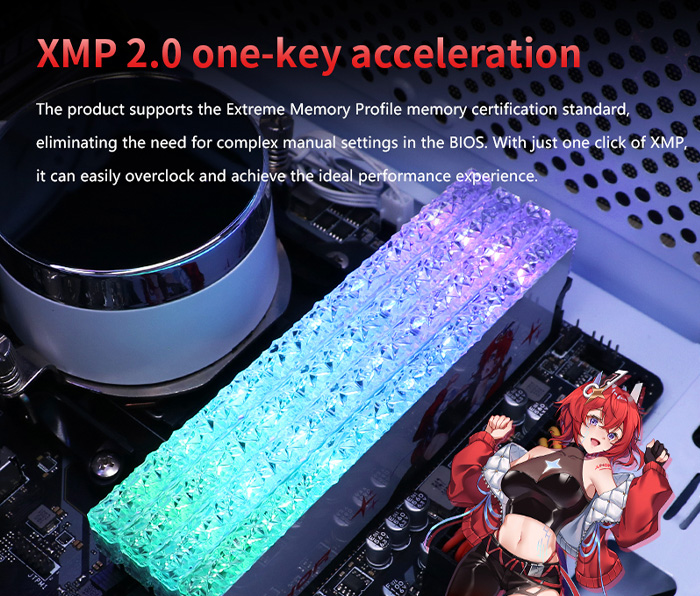
Memory testing and lighting testing should be documented separately. A module may pass memory stress tests while showing an uneven light bar, a failed LED, an unexpected default effect, or inconsistent color between modules in the same kit.
For an RGB SKU, the approval sample and production inspection plan should cover:
Cold boot, restart, shutdown, sleep, and wake behavior.
Default lighting behavior before control software loads.
Color and brightness consistency within a matched kit.
Software detection only for the motherboard brands, applications, and versions the supplier claims to support.
Lighting behavior after BIOS, operating-system, or control-software updates on the chosen test systems.
Physical finish, diffuser gaps, heat-spreader alignment, label position, and color matching.
Third-party lighting support may vary by motherboard model and software version. Put the tested environment in the product documentation and avoid a broad “compatible with all RGB software” claim unless it has been proved.
The commercial test is contribution by SKU, not gross margin on one unit. RGB may support a higher selling price, but it also adds forecasting risk and extra inspection. Track sell-through, weeks of stock, return reasons, discounting, and attachment rate to complete systems for each color and kit.
A useful rollout has three stages:
Pilot: approve samples and place a limited order for one RGB design and the channel's main kit configuration.
Measure: compare conversion, gross profit, inventory age, and support tickets against the nearest standard DDR4 SKU.
Expand selectively: add a second color or capacity only when the first RGB SKU turns at an acceptable rate.
If RGB demand is seasonal or campaign-led, agree on packaging quantities and reorder points before launch. Do not use the same forecast for black, white, and special-edition finishes.
A quotation should identify the exact item, not only “RGB DDR4 3200.” Ask the supplier to return a completed specification sheet covering:
Total capacity, module count, capacity per module, speed, voltage, and available profile.
RGB or non-RGB design, heat-spreader color, module dimensions, and cooler-clearance drawing.
Test platforms, BIOS versions, memory test method, and RGB inspection method.
Component and PCB revision policy, including advance notice for material changes.
Matched-kit process and whether modules in one retail kit are tested together.
Lighting-control method and the exact software and motherboard combinations tested, if synchronization is claimed.
MOQ by part number and color, sample terms, production lead time, packaging quantity, and label options.
Warranty period, return procedure, failure analysis, and replacement terms.
JUHOR lists an RGB DDR4 desktop memory line with 16GB and 32GB total kit options, based on 2 x 8GB and 2 x 16GB configurations. The page lists 3200MHz and 3600MHz, 1.35V, 288 pins, aluminum heat spreaders, and XMP 2.0 support for products above 3000MHz.
For the non-RGB tier, JUHOR also lists DDR4 desktop memory in black and white with matched dual-module kit options. These pages provide a starting specification, not a substitute for an order sheet. Buyers should confirm the exact capacity, frequency, voltage, profile, color, bill of materials, packaging, and validation requirements for each requested SKU.
If the platform decision is still open, review whether a gaming PC should use DDR4 or DDR5 before finalizing the range. DDR4 and DDR5 are not interchangeable, so the platform choice comes before the lighting choice.
No. Lighting does not add memory bandwidth or capacity. Compare performance using the same capacity, speed, timings, voltage, module count, and platform.
Yes, if it serves both appearance-led and price-led customers. Standard DDR4 should usually be the volume base, with a narrower RGB range for visible gaming builds.
The better SKU is the one supported by the target CPU, motherboard, BIOS, and selling price. A higher rating is not useful if the installed platform cannot run it reliably or the channel cannot explain the required profile.
For dual-channel gaming systems, matched kits make capacity and module count clearer and can simplify system qualification. Single modules can serve replacements and staged upgrades. Use separate part numbers and labels.
The memory function and default lighting behavior depend on the product design. Buyers should ask what happens at first boot and which software and motherboards have been tested for control or synchronization.
They may fit the same DDR4 slots, but mixing different modules can change speed, profile behavior, stability, and appearance. For repeatable commercial builds, use one validated kit configuration.
Too many combinations of color, capacity, frequency, kit format, and design. Begin with one main RGB design and expand only when sell-through supports another SKU.
Approve the golden sample, specification sheet, dimensions, lighting behavior, tested platforms, packaging artwork, labels, component-change policy, inspection plan, and return process.
Send JUHOR the target countries, sales channels, CPU and motherboard platforms, planned system price tiers, required capacities and speeds, RGB or standard split, colors, kit format, order quantity by SKU, packaging needs, and delivery window. The reply should separate confirmed specifications from options that still require sample validation. That makes the quotation useful for both purchasing and product approval.


4 / F, No. 18, Langkou Industrial Park, Langkou Community, Dalang Street,Shenzhen,Guangodng , China