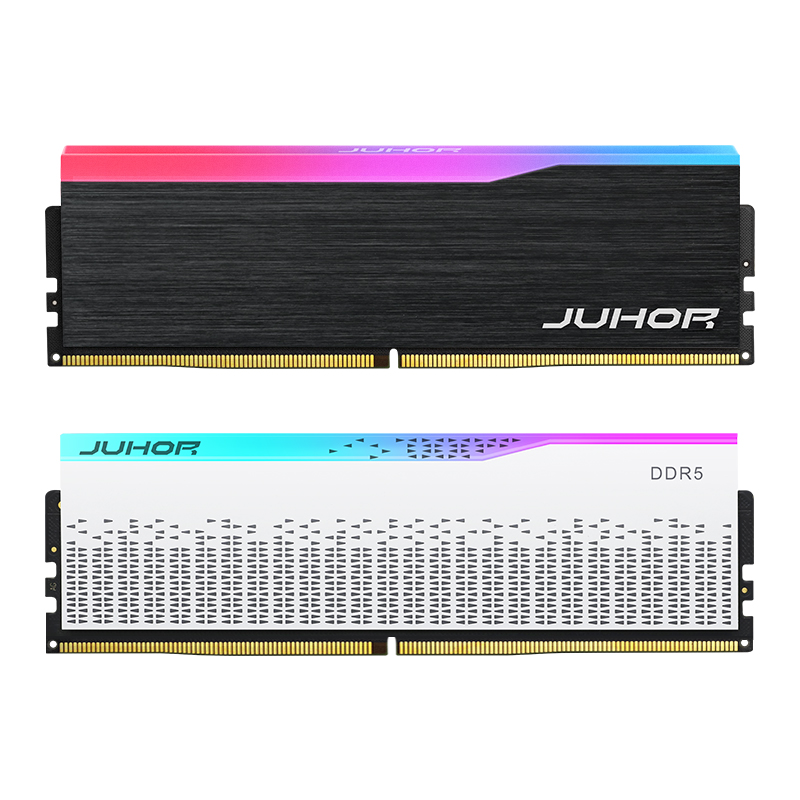
A private-label gaming brand does not need to choose between RGB and non-RGB DDR5 as if one is universally better. It needs to decide which version serves each channel, how many visual variants the forecast can support, and whether lighting adds enough sales value to justify extra design, software, packaging, quality-control, and after-sales work.
DDR5 RGB RAM can make a product recognizable in transparent gaming cases, retail photos, system-builder videos, and livestreamed builds. Non-RGB memory can offer a cleaner appearance, lower height, fewer compatibility variables, and a more direct value message. The best product line may include both, but only when each SKU has a clear buyer and price position.
| Decision area | DDR5 RGB RAM | Non-RGB DDR5 RAM |
|---|---|---|
| Main buyer | Gaming enthusiasts, DIY channels, transparent-case builders, visual system brands | Value gaming, stealth builds, workstations, integrators, and air-cooled systems |
| Primary value | Lighting, visual identity, color coordination, and shelf appeal | Performance specification, compact design, simplicity, and price control |
| Extra validation | LED consistency, color behavior, lighting control, standby states, and software compatibility | Mechanical clearance and normal memory qualification |
| SKU pressure | Can multiply by heatsink color, lighting design, kit size, speed, and package | Usually easier to consolidate around capacity and speed |
| Support risk | Lighting complaints can become product returns even when memory works correctly | Fewer cosmetic and control-software support cases |
RGB does not inherently increase memory capacity, bandwidth, or application performance. Compare performance using the module's capacity, data rate, timings, voltage, rank, profile, and platform validation. Treat lighting as a separate product feature.
Before choosing a heat spreader, define what the brand promises. A visually expressive esports brand may need addressable lighting, black and white options, and packaging built for retail photography. A performance-value brand may be better served by one non-RGB design with a strong specification and simple color choice.
Ask four commercial questions:
Where will the product be sold: DIY retail, marketplace, distributor, system integrator, or prebuilt gaming PC?
Will buyers see the memory after installation?
Does the brand already use a defined lighting ecosystem or visual language?
Can forecast volume support separate colors, capacities, speeds, and package designs?
If the product is installed inside an opaque business chassis, RGB has little visible value. If it appears inside a glass-sided gaming PC and in every product photo, lighting can be part of the brand experience.
RGB is most useful when the memory participates in the complete system design. A private-label brand can coordinate the light bar, diffuser shape, heat-spreader geometry, logo placement, PCB color, and package artwork with its cases, fans, coolers, keyboards, or prebuilt PCs.
It also creates merchandising options. A white RGB module can support all-white builds, while a black version can fit a broader gaming range. Retailers can use illuminated product photography and installed-system images that a plain module cannot reproduce.
However, RGB should not become a substitute for a disciplined memory specification. The brand must still control capacity, module count, speed, timings, voltage, XMP or EXPO profile, PCB and component revision, and platform compatibility. An attractive sample that cannot be reproduced consistently is not ready for a private-label launch.
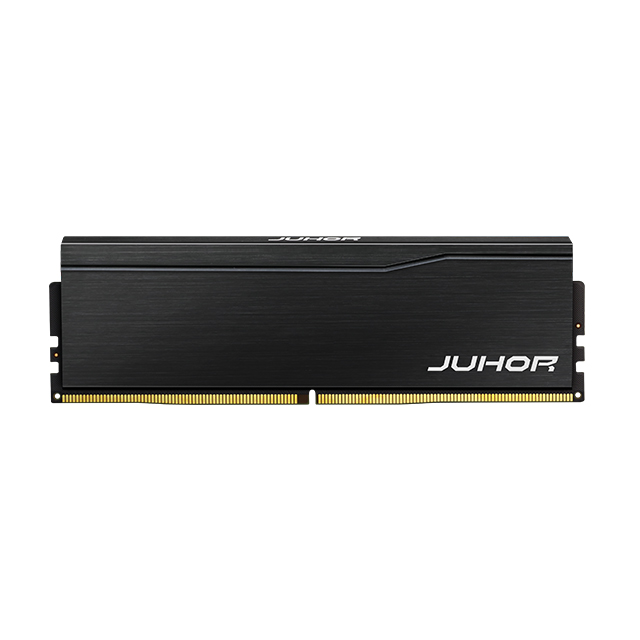
Non-RGB memory is not limited to office computers. Many gaming buyers prefer a dark, minimal, or component-neutral system. Others prioritize the graphics card, processor, capacity, and speed over lighting. A private-label brand can use non-RGB DDR5 to reach these buyers without forcing them to pay for a feature they may disable.
A lower-profile design may also improve clearance under large air coolers. RGB light bars often add height, so a brand should compare exact mechanical drawings rather than assuming the RGB and non-RGB versions fit the same systems.
Non-RGB SKUs are also useful for gaming cafés, prebuilt fleets, workstation-gaming hybrids, and price-led channel bundles. They can carry the same core capacity and speed positioning as the RGB line while using simpler appearance and packaging.
Two modules with the same capacity and advertised speed may use different PCBs, heat spreaders, heights, programmed profiles, DRAM configurations, or power requirements. The RGB version adds LEDs, a light guide, and control circuitry. Therefore, the private-label specification should identify each version by its own part number and BOM revision.
If the brand wants the two lines to offer equivalent memory performance, define that as an engineering requirement and validate it. Confirm:
Capacity per module and modules per kit
Rated data rate, timings, voltage, and standard profile
Intel XMP or AMD EXPO configuration where required
DRAM, PCB, PMIC, and SPD control policy
Heat-spreader dimensions and cooler clearance
RGB controller, LED count, diffuser, and programmed behavior
Separate part numbers, labels, serials, and packaging
Do not mix RGB and non-RGB modules into one kit merely because the headline memory specifications match. Kits should be qualified and packaged as controlled combinations.
The phrase “motherboard RGB compatible” is incomplete. Lighting behavior can depend on the motherboard, BIOS, operating system, control software, software version, and other connected RGB devices. The supplier should name the ecosystems and configurations it has tested rather than promising universal compatibility.
| RGB test | What to check | Typical failure visible to the buyer |
|---|---|---|
| Power-on behavior | Default color and effect before software loads | Unexpected color, flashing, or unequal startup |
| Color consistency | Module-to-module brightness and color match | One module looks warmer, dimmer, or uneven |
| Effect control | Static, cycle, synchronization, brightness, and off state | Effect does not apply or one module loses synchronization |
| Software detection | Named motherboard and control-software versions | Memory is absent or incorrectly identified |
| Sleep and restart | Behavior after sleep, shutdown, restart, and BIOS reset | Lighting freezes or returns to an unwanted default |
| Mixed-device system | Memory with fans, cooler, board, and case lighting | Control conflicts or inconsistent effects |
Keep RGB acceptance separate from memory stability acceptance. A module may pass memory testing and still fail the brand's cosmetic requirement. The quality agreement should define whether a lighting defect is critical, major, or minor and how color variation is judged.
A rendered light bar can look perfect while the physical sample shows LED hotspots, dark zones, color variation, logo shadows, or light leakage. Approve samples under consistent room lighting, camera exposure, brightness, and viewing angles.
Review the diffuser material, surface finish, logo position, heat-spreader coating, fasteners, adhesive, and color tolerance. White parts often reveal shade differences more clearly than black parts. If the brand sells both colors, define separate approved color standards and keep physical reference samples.
Mechanical design also affects installation. Confirm total module height, width, heat-spreader alignment, slot-latch access, adjacent-module clearance, and interference with common air coolers. RGB and non-RGB versions need separate drawings when their structures differ.
Every combination of lighting, color, capacity, kit size, speed, profile, and package can become a separate inventory item. A new private-label brand rarely needs every combination at launch.
| Launch tier | Suggested role | SKU approach |
|---|---|---|
| Core performance | Main gaming capacity and speed | One black non-RGB kit with the widest channel fit |
| Visual gaming | Main RGB offer | One black RGB kit using the same capacity and speed position |
| White-build extension | Appearance-led premium or seasonal line | Add only after demand for the core RGB SKU is proven |
| Higher-speed halo | Premium marketing and enthusiast channel | Use a separate qualified part number and limited forecast |
This structure lets the brand test whether customers pay for lighting before multiplying capacities and colors. If the market is strongly appearance-led, RGB can become the core SKU and non-RGB can serve system builders or price-sensitive distribution.
The RGB cost difference may include more than LEDs. It can involve a custom diffuser, heat-spreader tooling, control hardware, assembly, lighting inspection, color sampling, product photography, retail packaging, software support, and additional returns.
Request the quotation in separate lines where possible:
Base memory configuration
RGB hardware and control requirement
Heat spreader, color, and tooling
Logo, label, and packaging setup
Samples and engineering validation
MOQ by color and configuration
Production lead time and component assumptions
Warranty, lighting-defect treatment, and RMA responsibility
A visually differentiated SKU can justify a premium when it creates demand and brand recognition. It is less valuable when the channel discounts it to the price of plain memory while the brand keeps the additional support burden.
The golden sample should identify the complete memory configuration and the approved visual result. Record capacity, module count, speed, voltage, timings, programmed profiles, PCB and BOM revision, heat-spreader dimensions, color, logo, diffuser, LED behavior, label, and package.
The pilot lot should use production materials and processes. Test module function, platform compatibility, XMP or EXPO behavior, RGB detection, color consistency, repeated power cycles, sleep and wake behavior, packaging protection, and barcode traceability. Review failed samples and define corrective action before releasing volume production.
After approval, changes to the DRAM source, PCB, PMIC, SPD data, RGB controller, LED, diffuser, coating, or production location may require notification and revalidation. The exact rules belong in the quality agreement.
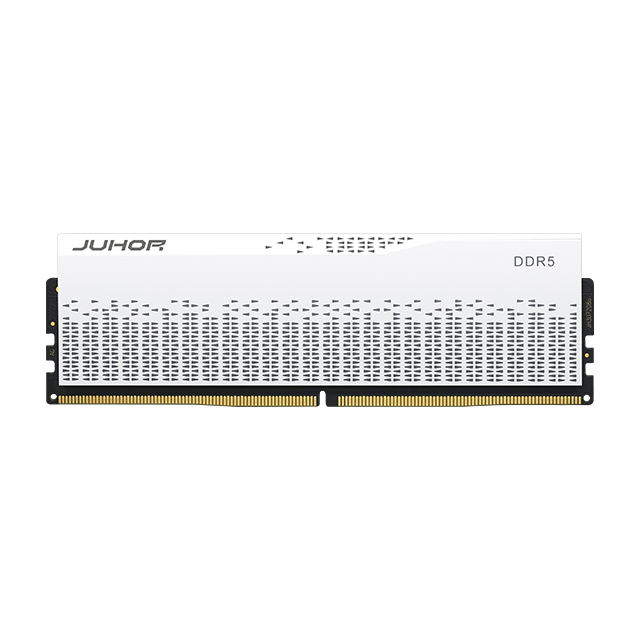
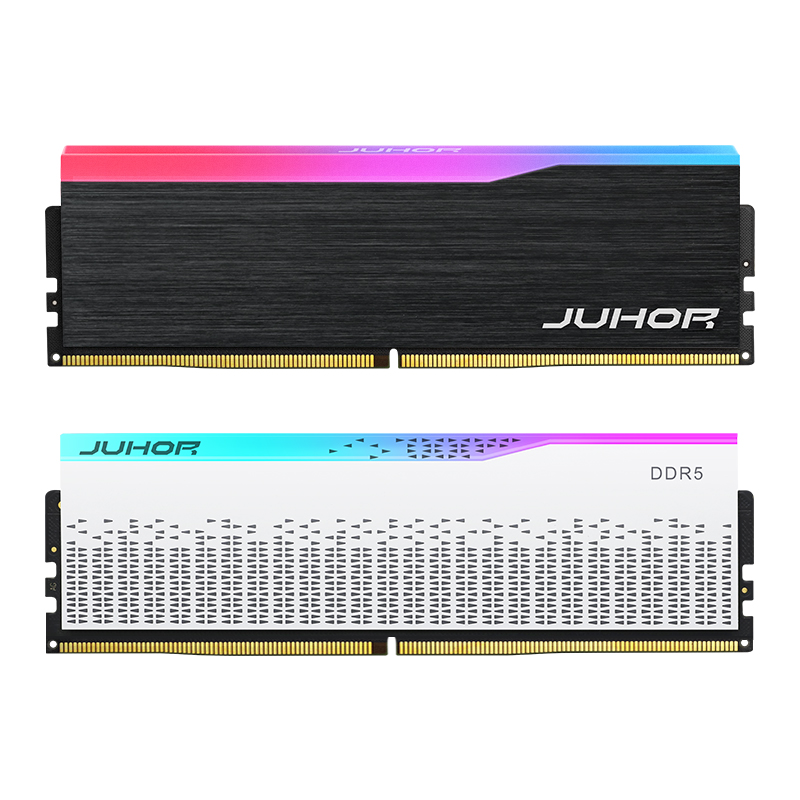
Juhor's DDR5 RGB Star Domain memory is published in white and black, with a full-size light guide, aluminum heat spreader, 288-pin desktop format, 1.25V listing, and 4800, 5600, 6000, and 6400 MT/s options. The page describes 8GB x 2 as 16GB total and 16GB x 2 as 32GB total.
Juhor also publishes a non-RGB DDR5 Star Domain product for desktop gaming systems. Buyers should request current part-specific datasheets before assuming both lines share the same capacity, frequency, voltage, timings, memory profile, DRAM source, or supply format.
The related guide to RGB DDR5 for DIY channels versus business SKUs can help distributors separate gaming retail demand from standard system-integration demand. For a private-label project, the next step is to confirm which logo, heat-spreader, color, light guide, package, MOQ, and test options Juhor can support for the quoted configuration.

Target market, price tier, and sales channel
RGB, non-RGB, or both product lines
Black, white, or custom color requirement
Capacity per module, modules per kit, speed, voltage, timings, and profile
Target motherboards, CPUs, BIOS versions, and RGB software
Logo, label, heat spreader, light guide, and packaging artwork
Sample quantity, pilot quantity, launch order, and forecast by SKU
Memory, RGB, cosmetic, packaging, and traceability acceptance criteria
MOQ, tooling, lead time, change control, warranty, and RMA expectations
A complete RFQ helps the manufacturer distinguish existing product options from new design work and prevents a cosmetic request from hiding an unresolved electrical or compatibility requirement.
Not because of the lighting. Compare capacity, speed, timings, voltage, profiles, module configuration, and platform results. RGB primarily changes appearance and control requirements.
Yes. It fits value gaming systems, stealth builds, air-cooled PCs, workstation-gaming systems, and buyers who prioritize core specifications over lighting.
Only when forecast volume supports both. Launching one core color first can reduce inventory and simplify sample, packaging, and color-control work.
They should have clearly differentiated part numbers, labels, images, and descriptions. Shared packaging is possible only if it prevents picking errors and accurately identifies the enclosed product.
Choose according to the target motherboards and market. Require the supplier to name tested software and versions rather than claiming universal RGB compatibility.
It can. Light bars may increase module height. Check the mechanical drawing against the CPU cooler and DIMM-slot layout of the intended systems.
It should control the memory specification, PCB and component revision, heat spreader, color, logo, diffuser, lighting behavior, label, and package.
Confirm the exact part number, capacity and kit format, speed, voltage, timings, profile, RGB control, available colors, customization, MOQ, lead time, test plan, warranty, and RMA terms.
DDR5 RGB RAM earns a place when visual identity helps the gaming brand sell a system or retail kit. Non-RGB DDR5 remains valuable when buyers want clean design, broad mechanical fit, or a lower-cost performance specification. A disciplined private-label line gives each version a clear job and controls every variant as a separate product.
Send Juhor your target capacity, speed, RGB requirement, color direction, platform list, packaging brief, forecast, and acceptance criteria to compare available DDR5 configurations and plan samples.


4 / F, No. 18, Langkou Industrial Park, Langkou Community, Dalang Street,Shenzhen,Guangodng , China