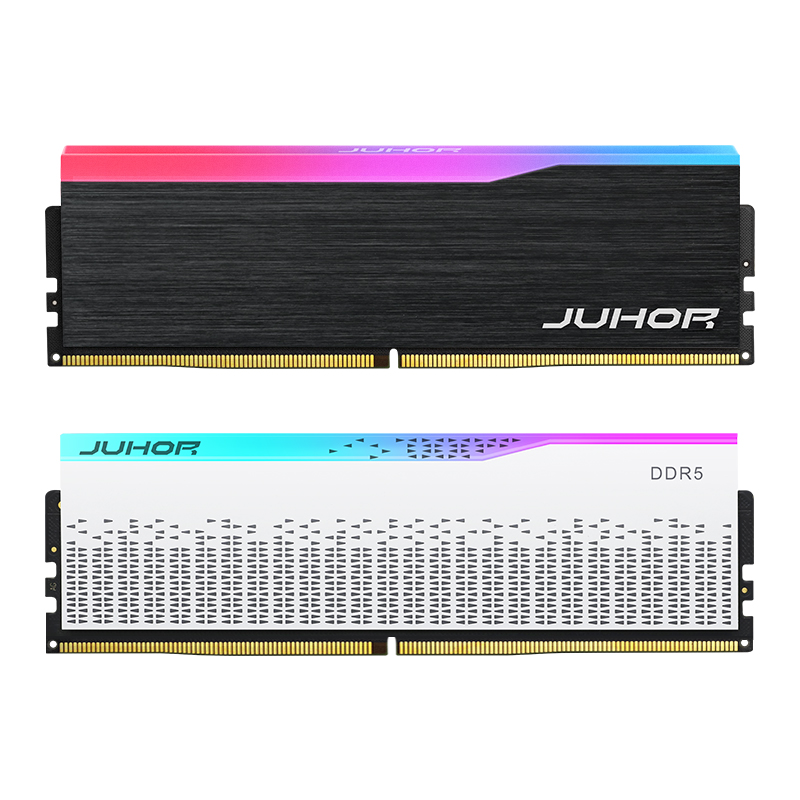
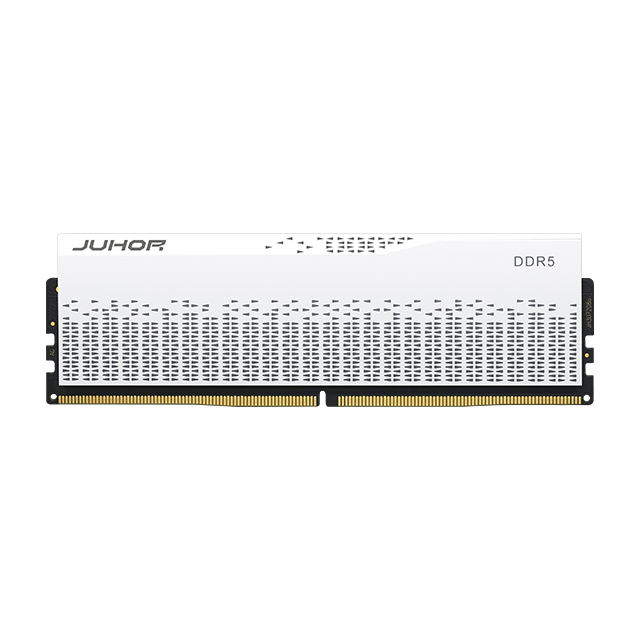
Memory plays a critical role in determining the overall performance of a computer system. Whether users are building a gaming PC, a workstation, or a productivity system, choosing the right memory module can significantly affect speed, multitasking ability, and system stability. With the transition from DDR4 to DDR5 already underway, DDR5 memory has gradually become the preferred option for modern platforms.
Among the available options, DDR5 6000MT/s is widely considered a practical performance level for many new systems. It provides higher bandwidth than earlier DDR generations while maintaining stable operation across most supported processors and motherboards. In this review, we take a closer look at the Juhor DDR5 6000 memory module, examining its design, specifications, benchmark performance, and real-world usage.
Before evaluating performance, it is useful to understand the basic specifications of the memory module. The Juhor DDR5 6000 memory reviewed here features a frequency of 6000MT/s, with a timing configuration of CL36-38-38-96 and a working voltage of 1.25V. Each module provides 16GB of capacity, which is a common configuration for modern desktop systems.
In addition, the module supports both Intel XMP 3.0 and AMD EXPO memory profiles. This allows users to enable optimized performance settings directly through the BIOS with a single click. The module also includes a built-in PMIC power management chip, which is a standard feature of DDR5 memory and helps regulate voltage more efficiently.
When operating under the JEDEC standard, the default frequency is 4800MT/s. Once the XMP or EXPO profile is activated, the module can run at the rated 6000MT/s frequency, providing higher bandwidth for demanding workloads.
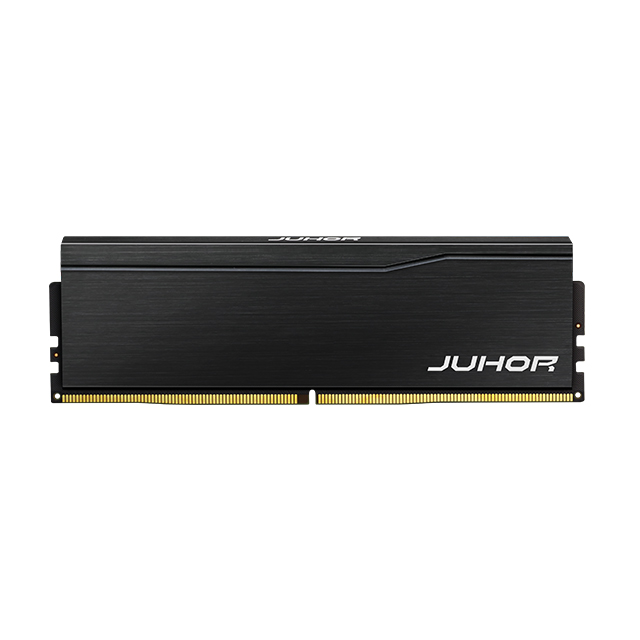
Moving from specifications to physical design, the Juhor DDR5 6000 module uses a black aluminum alloy heat spreader to improve thermal performance. The heatsink has a thickness of approximately 1.5mm, which helps dissipate heat from the memory chips during high-load operation.
The outer surface of the heatsink features a brushed metal texture, giving the module a simple but durable appearance. Meanwhile, the module height is about 42mm, which makes it compatible with most tower-style air coolers without creating clearance issues.
Looking at the internal structure, the module adopts a single-sided chip layout, with eight memory chips positioned on one side of the PCB. Thermal pads are placed between the chips and the heatsink to ensure efficient heat transfer. This structure provides both mechanical stability and reliable cooling performance.
After examining the hardware design, the next important aspect is compatibility. In practical use, the Juhor DDR5 6000 memory installs easily into modern motherboards that support DDR5. During testing, the module successfully completed system initialization without any issues.
Once installed, the XMP or EXPO profile can be enabled through the BIOS, allowing the memory to operate at its rated frequency automatically. For systems using updated BIOS versions, compatibility is generally stable. As with any new hardware installation, it is recommended to run stability tools such as memory testing software to confirm proper operation.
To evaluate the actual performance of the Juhor DDR5 6000 memory, several benchmark tests were conducted. In the AIDA64 memory benchmark, the module achieved the following results:
Read speed: 72933 MB/s
Write speed: 76577 MB/s
Copy speed: 68129 MB/s
Memory latency: 82.9 ns
These results demonstrate consistent read and write throughput, which is suitable for modern gaming systems and productivity workloads that require fast data transfer between the CPU and memory.
In addition to memory testing, overall system benchmarks were performed to observe real-world behavior under CPU workloads. The test platform included a high-performance desktop processor and a modern graphics card.
In the 3DMark Time Spy benchmark, the system achieved a total score of 22862 points, with strong graphics and CPU performance. Meanwhile, the CineBench R23 benchmark recorded a multi-core score of 44267 and a single-core score of 2260.
These results indicate that the memory operates reliably under demanding workloads and does not create performance bottlenecks for modern processors.
To provide a clearer perspective, the Juhor DDR5 6000 module was compared with another memory module using Hynix A-Die chips at the same 6000MT/s frequency. The competing module uses tighter timings but requires a higher operating voltage.
In the AIDA64 test, both modules delivered similar read and write speeds. The Hynix-based memory showed slightly lower latency due to tighter timings. However, the overall performance difference was relatively small.
For example, in the CineBench R23 benchmark, the performance gap between the two modules was less than 1% in multi-core scores. This suggests that in many real-world applications, users are unlikely to notice a significant difference in performance.
Gaming performance is another key factor for many users. Several popular titles were tested at 1080p resolution with high graphics settings.
In Forza Horizon 5, the average frame rate reached 177 FPS, demonstrating stable performance. In Cyberpunk 2077, the difference between memory modules was less than one frame per second. Meanwhile, in Counter-Strike 2, the system achieved over 800 FPS average, with strong 1% low frame stability.
Overall, the gaming tests show that DDR5 6000 provides sufficient bandwidth for modern game engines, and performance differences between similar DDR5 modules are minimal.
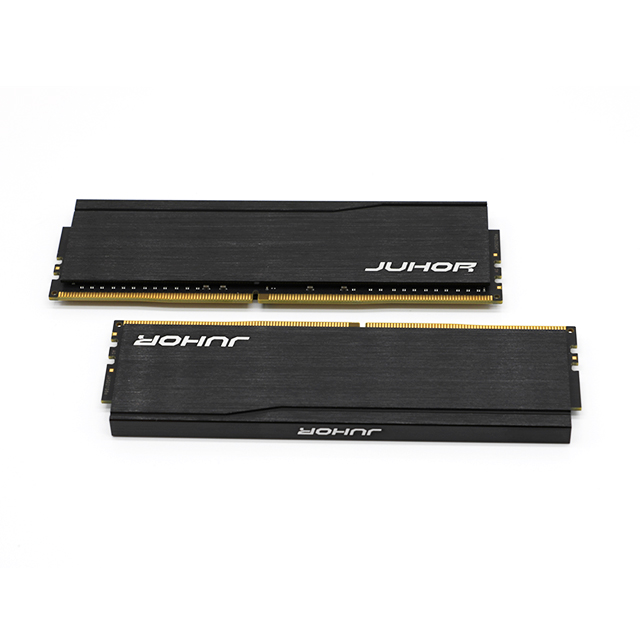
Beyond standard operation, the Juhor DDR5 6000 memory also shows some tuning potential. During testing, the memory frequency was increased to 6200MT/s while adjusting several secondary timing parameters.
After optimization, the AIDA64 benchmark showed improved results:
Read speed increased to 81557 MB/s
Write speed increased to 87035 MB/s
Copy speed increased to 76102 MB/s
Latency reduced to 74.9 ns
These improvements demonstrate that the module can achieve higher bandwidth through moderate manual tuning.
Finally, thermal and stability testing was conducted using a stress-testing tool for approximately 25 minutes. During the test, the maximum recorded power consumption was 4.875W, and the SPD hub temperature reached about 58°C in a room environment of 28°C.
Importantly, the system completed the entire test without reporting memory errors. This indicates stable operation under sustained load conditions.
In conclusion, the Juhor DDR5 6000 memory module delivers balanced performance for modern desktop platforms. It offers reliable operation at its rated frequency, consistent benchmark results, and stable behavior under both productivity and gaming workloads.
Although some premium memory modules may provide slightly lower latency, the overall performance difference in real-world scenarios remains small. Combined with its solid cooling design and compatibility with current platforms, the Juhor DDR5 6000 memory provides a practical option for users seeking dependable DDR5 performance.
Juhor DDR Memory Solutions
Juhor is a professional manufacturer specializing in high-quality memory products. As an experienced DDR Memory supplier, Juhor provides reliable DDR4 and DDR5 memory modules designed for gaming PCs, workstations, and industrial applications.
With strict quality control and a focus on performance and stability, Juhor helps customers build efficient and dependable computing systems. If you are looking for reliable DDR memory solutions, Juhor offers products that combine performance, durability, and competitive value.


4 / F, No. 18, Langkou Industrial Park, Langkou Community, Dalang Street,Shenzhen,Guangodng , China