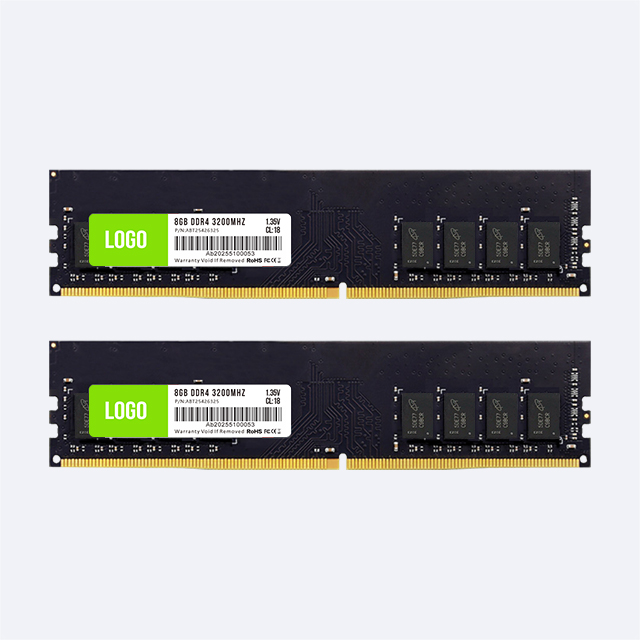
Two suppliers can quote “16GB DDR4-3200” and still offer different commercial products. One quote may refer to a desktop UDIMM, another to a laptop SODIMM. Labels, voltage, SPD settings, module organization, packaging, sample terms and after-sales responsibility may also differ. A unit price comparison is unreliable until these fields are fixed.
Importers, distributors and private-label brands need a sourcing process that connects the approved sample to every production shipment. This checklist covers the decisions that belong in a bulk DDR4 RAM RFQ, the records required for batch control, and the terms that should be settled before payment and production.

A message asking for “your best price for 1,000 pieces of DDR4” leaves the supplier to choose the product definition. The resulting quotes will not be comparable. State the target market, device type and saleable configuration before requesting price.
| RFQ field | Information to provide | Why it changes the quote |
|---|---|---|
| Application | PC assembly, laptop upgrade, refurbishment, retail replacement or private label | Defines compatibility, packaging and support needs |
| Module type | UDIMM or SODIMM; non-ECC, ECC or registered class where applicable | Prevents a physically or electrically incompatible offer |
| Configuration | Capacity per module, module count, rated speed, voltage and required profiles | Separates a single module from a multi-module set |
| Target platforms | CPU, motherboard or laptop models, BIOS and planned slot population | Allows sample selection and compatibility review |
| Volume plan | Sample quantity, first order, monthly forecast and capacity mix | Affects production planning, stock reservation and packing |
| Private-label scope | Logo, module label, barcode, retail box, insert, language and carton marks | Defines artwork, materials, approvals and production work |
| Delivery | Destination, target date, shipment method and requested trade term | Determines the commercial and logistics response |
| After-sales | Required warranty route, failure report, replacement or credit process | Exposes the cost and responsibility after delivery |
If several capacities or speeds are required, place each configuration on a separate line. A mixed order described as one SKU creates problems in labeling, receiving, inventory and customer support.
DDR4 identifies the memory generation, not the complete module. A distributor must still define the form factor, capacity, speed, voltage, error-correction class, module count and platform behavior. Desktop DDR4 UDIMMs and laptop DDR4 SODIMMs do not share the same physical slot. ECC UDIMMs and registered server modules also require explicit platform support.
Ask the supplier to return a controlled specification rather than repeating the short product name. It should identify the quoted part number and the technical fields that affect compatibility. When appearance matters, add the PCB color, heat spreader, logo orientation and label position.
Buyers who still need to set the platform and saleable capacity mix can use Juhor's DDR4 RAM buying guide for PC builders and distributors. The sourcing document should then convert the selected configuration into an exact RFQ line.
A product photograph confirms appearance. It does not prove that the module boots on the target board, exposes the expected SPD information or remains stable in the required slot layout. Request samples for every commercial configuration that will become an internal SKU.
Test the sample with the production CPU, motherboard or laptop, BIOS revision and operating-system image. Confirm the module label, recognized capacity, operating speed and channel mode. Run cold boots, restarts, sleep or resume where relevant, a memory diagnostic and the customer's normal workload. A two-module product should be tested in the final pair and slot arrangement.
The approved sample record should contain:
Supplier and buyer part numbers
Module photographs and label artwork revision
Capacity, form factor, rated speed, voltage and memory class
Recorded SPD or profile information used for approval
Test platform, BIOS, slot population and diagnostic result
Packaging sample and barcode verification
Approval date and authorized approver
Keep a retained sample when practical. It gives purchasing, quality and after-sales teams a shared reference when later shipments are inspected.
The central sourcing question is not whether one sample works. It is whether later production remains within the approved definition. Ask what is controlled in the bill of materials and which changes trigger notification or a new sample.
A supplier may need to manage component availability across repeat orders. The buyer should not assume that every internal component will remain unchanged indefinitely, nor allow silent substitutions. Define which changes require written approval, such as memory IC organization, PCB revision, SPD programming, heat spreader, label, packaging or barcode data.
Put the revision number of the specification and artwork on the purchase order. If the quotation allows an equivalent configuration, state the technical boundaries and approval process. “Same specification” is too vague for a private-label product that must remain compatible and visually consistent.
Batch consistency does not mean accepting a supplier's verbal promise that all modules are identical. It means defining traceability, inspection and change control so differences can be detected and handled.
Ask how the production lot is identified on modules, inner packs and outer cartons. The receiving team should be able to link a failure to the affected shipment and test record. If one order contains more than one production lot, the packing list should identify the separation rather than mixing units without notice.
Agree on a sampling plan and pass/fail rules before shipment. The buyer should set the sample size according to volume, supplier history and the cost of a field failure. Inspection can cover label and barcode data, visible condition, capacity, form factor, SPD comparison and functional testing on approved platforms. Exceptions should be quarantined until the supplier and buyer decide whether the lot can be released.
“100% tested” is incomplete unless the supplier explains what the test checks. Ask for the production test stages, equipment or platform category, test duration where relevant, pass/fail criteria and retained records. Compatibility testing and memory diagnostics answer different questions, so confirm whether both are included.
The buyer does not need confidential factory instructions. It does need enough information to connect a shipment to a defined quality process. Request the data that will be available if a lot-level problem appears: lot code, tested quantity, result record, failure analysis contact and the method used to contain affected stock.

A quoted lead time applies to a defined product, volume and approval status. Private-label artwork, packaging materials, component availability and shipment booking can change the schedule. Ask the supplier to separate sample preparation, artwork approval, production, inspection and transit time.
Provide a rolling forecast by SKU rather than one annual total. The mix between 8GB, 16GB and 32GB or between UDIMM and SODIMM affects planning. Mark which portion is a firm order and which is an estimate. For repeat business, ask when the forecast becomes a material commitment and how shortages or allocation changes will be communicated.
Before payment, confirm:
Sample and production lead-time basis
MOQ for each standard or private-label SKU
Quote validity and payment milestones
Requested shipment term and named destination
Partial-shipment and back-order rules
Required documents and pre-shipment inspection date
Process for changing or cancelling an unproduced quantity
MOQ, pricing, delivery and availability should come from the current quotation. Do not carry these terms from a previous order without confirmation.
A private-label RAM order has several controlled outputs: the module label, barcode, retail package, insert, carton label and product photography. Create an approval sheet for each item and identify the final file revision. Confirm whether the barcode encodes the buyer SKU, supplier part number, serial number or lot code.
The retail box must describe the product accurately. It should distinguish total kit capacity from capacity per module and state DDR generation, form factor and rated speed. Do not print compatibility claims, certification marks or warranty language until the supplier and buyer have evidence and authority to use them in the destination market.
For bulk packing, specify ESD protection, module separation, inner quantity, carton quantity, carton marks and handling needs. Packaging should prevent contact damage and movement during international transport. The buyer's freight provider or customs adviser should confirm the required shipping documents and import classification for the destination.
A warranty period alone does not explain how a distributor will receive support. Define the process for dead-on-arrival units, field failures and suspected batch problems before the first commercial shipment.
| After-sales item | Question to settle before ordering |
|---|---|
| Failure evidence | Which system, BIOS, diagnostic result, photographs, quantity and lot code are required? |
| Authorization | Who approves a return, and must failed samples be shipped back? |
| Resolution | Will accepted claims receive replacement, repair or credit? |
| Freight | Who pays for return and replacement transport? |
| Response time | When will initial review, failure analysis and resolution occur? |
| Lot containment | What happens when failures indicate that untested stock from the same lot may be affected? |
| Channel support | Can the distributor replace customers from local stock and consolidate claims? |
Keep a small service-stock quantity only when the commercial plan supports it, and track replacements against the original lot. This helps distinguish isolated device compatibility issues from a repeated product problem.
Price belongs in the comparison, but it should not hide missing controls. Score each response against the same requirements.
| Evaluation area | Acceptable evidence | Warning sign |
|---|---|---|
| Product definition | Exact part number and controlled specification | Only capacity and speed are stated |
| Sample link | Approved sample is tied to a revision and production order | Sample is described as “similar stock” |
| Change control | Notification and reapproval triggers are written | Equivalent substitutions are unrestricted |
| Traceability | Lot codes connect modules, cartons and test records | Mixed stock cannot be separated |
| Delivery plan | Approval, production and shipment stages are dated | Lead time has no stated starting condition |
| RMA | Evidence, responsibility, freight and resolution are defined | Only “warranty included” appears |
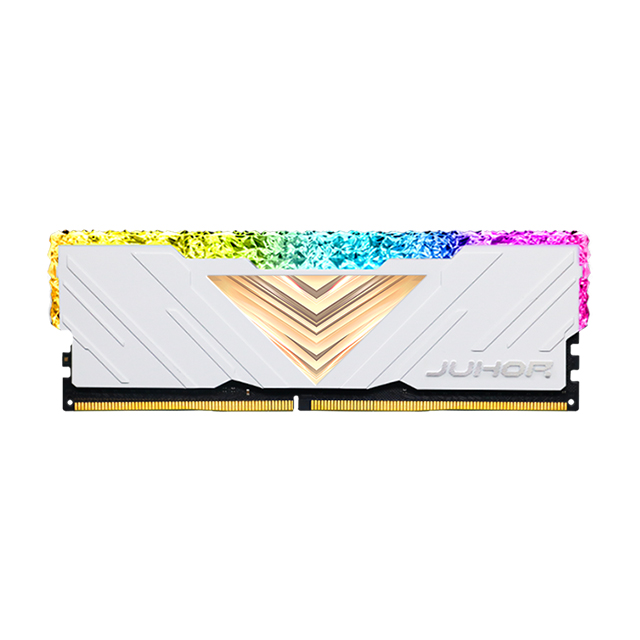
Juhor has separate DDR4 desktop memory and DDR4 laptop memory product lines. Its public product pages also state that OEM and ODM services can cover branding, specifications and packaging for bulk orders.
Public catalog ranges are a starting point, not a final availability matrix. Ask Juhor to confirm the exact capacity, speed, voltage, module format, packaging, sample terms, MOQ, lead time and warranty route in the project quotation. Private-label buyers should submit artwork and barcode requirements with the forecast so the technical sample and packaging sample can be reviewed together.
Company, country and sales channel
Application and target platform list
DDR4 UDIMM or SODIMM and required memory class
Capacity per module, module count, speed and voltage
Quantity per SKU, first order and monthly forecast
Sample quantity and required validation platforms
Standard, Juhor-branded or private-label product
Label, barcode, package, insert language and carton marks
Destination, target delivery date and requested shipping term
Batch traceability, change-notification and inspection requirements
Warranty, RMA, replacement and failure-analysis expectations
Send the completed list with one line per configuration. The supplier can then return a quote that purchasing, engineering, quality and logistics teams can evaluate without filling gaps by assumption.
Provide the module format and class, capacity, speed, voltage, module count, target platforms, quantity, destination, delivery target, packaging and after-sales requirements.
Yes. Approve each saleable configuration on representative platforms and retain the specification, test result, label and packaging record used for production.
No. Compatibility depends on the CPU, motherboard or laptop, BIOS, module layout and memory settings. Group platforms only after the relevant specifications and tests agree.
It means the shipment follows an approved definition, has traceable lots, meets stated inspection rules and does not contain unapproved changes. It should be demonstrated through records, not assumed from matching labels.
Availability may require changes, but the quotation should state which changes need notification, documentation or a new sample. Silent substitutions should not be accepted.
Approve the technical sample, module label, barcode data, retail packaging, inserts, carton marks and product images. Keep a revision record for each item.
Use a written RMA process covering required evidence, authorization, return freight, replacement or credit, response time and containment of related stock.
Only when the compared products, testing, packaging, delivery and after-sales terms are equivalent. A lower price can become more expensive when it creates rework, returns or unusable inventory.
Prepare one RFQ line for each DDR4 configuration and attach the platform list, forecast, sample plan and private-label files. Ask Juhor to return the exact product definition, sample arrangement, batch-control method, production and delivery schedule, packing plan and RMA terms. This turns a price request into an order that can be validated, received and supported.


4 / F, No. 18, Langkou Industrial Park, Langkou Community, Dalang Street,Shenzhen,Guangodng , China