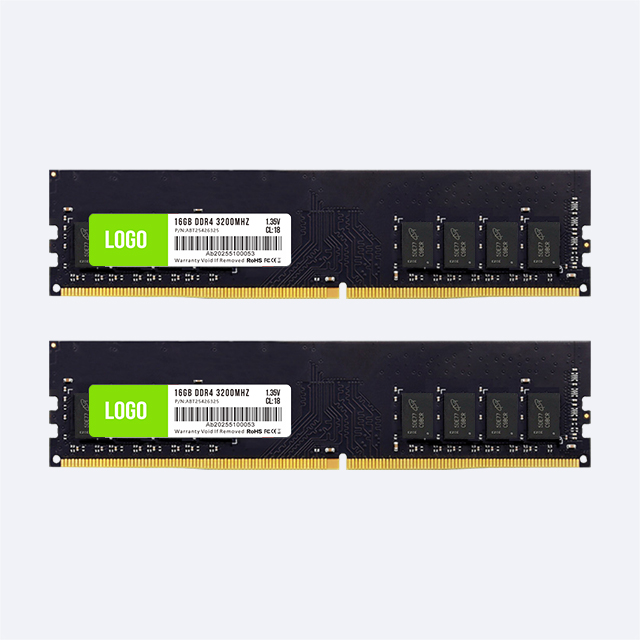
In modern computers, memory performance plays a critical role in overall system responsiveness. As processors become faster and applications handle more data at once, DDR memory has to keep up. This is why many users face the choice between standard DDR memory and overclocked DDR memory. Understanding how these two options differ helps you choose the right RAM for performance, stability, and long-term reliability.
To begin with, standard DDR memory refers to RAM that operates strictly within JEDEC specifications. JEDEC is the industry organization that defines official memory standards. DDR4 and DDR5 modules running at default speeds, such as DDR4-3200 or DDR5-4800, are typical examples of standard memory.
Because it follows official specifications, standard DDR RAM is designed for maximum compatibility and stability. It works reliably across a wide range of motherboards and CPUs without requiring manual configuration. As a result, standard memory is widely used in office computers, enterprise servers, and systems where long-term stability is more important than peak performance.

In contrast, overclocked memory operates beyond JEDEC standard speeds. This can happen in two ways: factory overclocking or manual overclocking. Most consumer overclocked DDR memory uses XMP (Extreme Memory Profile) for Intel platforms or EXPO for AMD platforms. These profiles store higher frequencies, tighter timings, and adjusted voltages directly on the RAM module.
Compared with standard memory, overclocked DDR RAM offers higher bandwidth and, in some cases, lower effective latency. However, it requires motherboard and CPU support to run correctly. Without compatible hardware, the memory will simply fall back to standard speeds.
To better understand the difference, it helps to look at how DDR memory works internally. Memory speed is defined by frequency, while responsiveness is influenced by timings such as CAS latency. Overclocking typically increases frequency, which raises memory bandwidth, but it may also increase latency values.
At the same time, the CPU’s integrated memory controller plays a key role. Even if a DDR5 module supports very high speeds, the controller may limit the achievable frequency. Because of this, memory overclocking is always a balance between speed, timings, voltage, and system stability.
From a performance perspective, overclocked memory can deliver measurable gains, but the impact depends heavily on workload. In gaming systems, higher memory frequency can improve frame rates in CPU-bound scenarios. Content creation tasks such as video editing and 3D rendering may also benefit from increased bandwidth.
On the other hand, everyday tasks like web browsing, document editing, and basic multitasking often show minimal differences between standard DDR RAM and overclocked memory. In these cases, faster storage or a stronger CPU usually has a bigger impact than memory speed alone.
While performance is important, stability is equally critical. Standard DDR memory is validated to run continuously at its rated speed under a wide range of conditions. This makes it ideal for systems that operate 24/7, such as workstations and servers.
Overclocked memory, even factory-tested kits, operates closer to its limits. Although modern DDR4 and DDR5 modules are well engineered, higher voltage and frequency can increase stress on memory chips. For users who prioritize long-term reliability, standard memory often provides greater peace of mind.
Another important factor is power efficiency. Overclocked DDR memory typically requires higher voltage, which increases power consumption and heat output. With DDR5, power management ICs are placed directly on the memory module, improving efficiency but also concentrating heat.
Standard DDR RAM generally runs cooler and consumes less power. This can simplify system cooling and improve overall energy efficiency, which is especially important in compact PCs or enterprise environments.
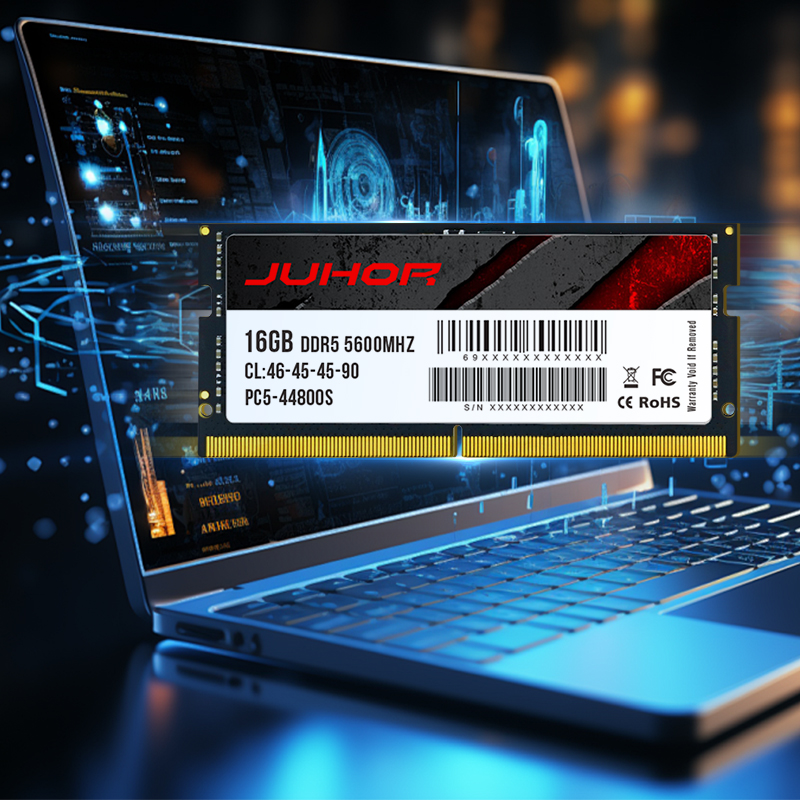
Not every system supports memory overclocking. Entry-level motherboards and many business-class systems lock memory speeds to JEDEC standards. Even on enthusiast platforms, CPU generation and BIOS versions can affect compatibility.
For this reason, users should always check motherboard memory support lists and CPU specifications before investing in overclocked DDR memory. In contrast, standard memory offers near-universal compatibility, making system building simpler and more predictable.
When deciding between overclocked memory and standard memory, usage scenarios matter. Gamers and PC enthusiasts who enjoy tuning their systems may benefit from overclocked DDR4 or DDR5 memory. Creative professionals working with large datasets may also see advantages from higher bandwidth.
However, for office users, home PCs, and enterprise systems, standard DDR RAM is often the smarter choice. It delivers reliable performance without added configuration or risk. Data centers and mission-critical systems, in particular, favor standard memory due to its stability and predictable behavior.
Price is another practical consideration. Overclocked memory usually carries a price premium. While the performance gains can be real, they are not always proportional to the cost increase. For many users, investing in more capacity rather than higher speed provides better overall value.
Standard DDR memory, on the other hand, offers strong performance at a lower cost, especially for DDR4 systems where pricing is very competitive.
It is often said that overclocked memory is always unstable, which is not entirely true. Factory-tested kits are designed to run at rated speeds safely. Another misconception is that higher frequency always means better performance. In reality, latency, CPU architecture, and workload type all play a role.
Understanding these factors helps users make informed decisions instead of relying on marketing numbers alone.
In summary, both standard DDR memory and overclocked memory have clear advantages. Standard DDR RAM excels in stability, compatibility, and efficiency, while overclocked memory offers higher performance for users who can take advantage of it. The right choice depends on your system platform, workload requirements, and long-term priorities.
If you are looking for reliable DDR memory solutions that balance performance and stability, Juhor provides a wide range of high-quality DDR4 and DDR5 products. As an experienced memory manufacturer, Juhor supports customers with dependable memory solutions designed for modern computing needs. Contact Juhor today to learn more about choosing the right DDR memory for your application.


4 / F, No. 18, Langkou Industrial Park, Langkou Community, Dalang Street,Shenzhen,Guangodng , China