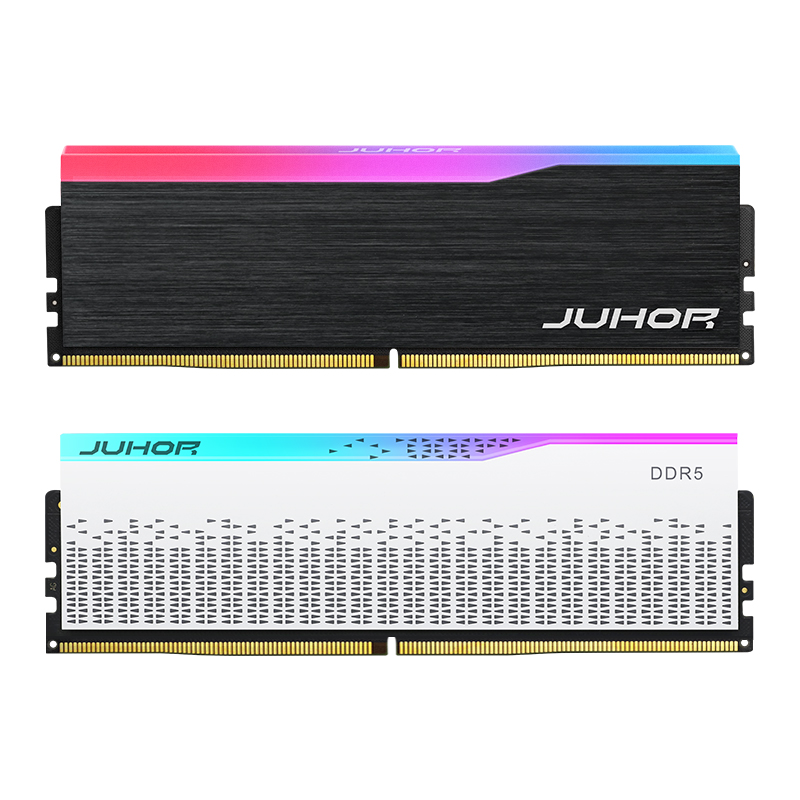
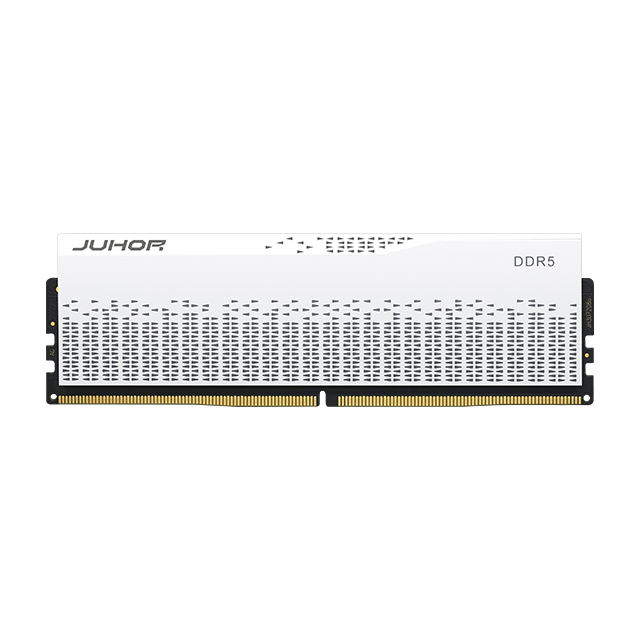
As industrial systems and data center servers handle more data than ever, memory has become a key factor in overall system stability and performance. Whether it is factory automation, edge computing, AI inference, or 7×24-hour server operation, modern platforms place far higher demands on memory bandwidth, power efficiency, and reliability than before.
Because of these rising requirements, DDR5 memory is gradually replacing DDR4 memory in both industrial and server environments. This shift is not simply about higher speed. Instead, DDR5 introduces architectural changes that directly address the limitations of DDR4 in high-density, high-load systems.
To better understand why DDR5 is becoming the new standard, it is useful to compare the two generations from a practical engineering perspective.
To begin with, one of the most important differences between DDR4 and DDR5 memory lies in their channel architecture.
DDR4 memory uses a traditional single 64-bit data channel per module. While this design has worked well for many years, it becomes less efficient when handling parallel data access in modern multi-core processors.
By contrast, DDR5 memory introduces two fully independent 32-bit sub-channels within a single module. This dual sub-channel design allows the memory controller to access data more efficiently and reduces command conflicts. As a result, memory bandwidth is used more effectively, and access delays are reduced.
For server applications, DDR5 RDIMM modules go one step further. Each module features two 40-bit sub-channels, adding an extra 8 bits per channel to support side-band ECC. This enhancement improves data protection while maintaining high throughput, which is essential for enterprise servers and mission-critical industrial systems.
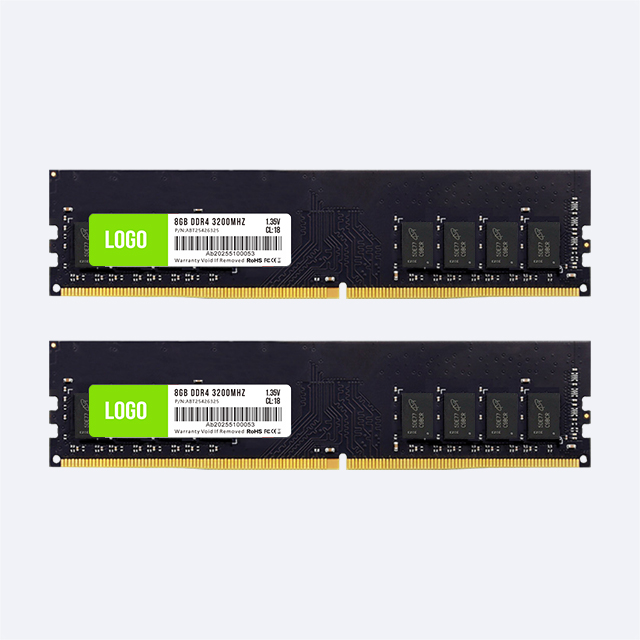
Building on the new channel design, DDR5 RDIMM server memory also introduces an updated Registering Clock Driver (RCD).
In practical terms, the RCD helps buffer command and address signals between the CPU and the memory modules. This reduces the electrical load on the CPU’s memory controller, which becomes increasingly important as memory capacity and operating frequency increase.
As a result, systems using DDR5 RDIMM benefit from better signal integrity, improved resistance to interference, and more stable operation at higher speeds. For industrial computers and servers running continuously under heavy load, this improvement directly contributes to long-term system reliability.
Another major architectural improvement can be found in the bank group design.
DDR4 memory supports four bank groups and a total of 16 banks. While sufficient for earlier workloads, this configuration limits parallel data access when multiple memory requests occur simultaneously.
DDR5 doubles the number of bank groups to eight and increases the total number of banks to 32. This expansion allows more operations to be handled in parallel, which improves overall memory efficiency and optimizes core timing behavior.
In real-world terms, this means DDR5 memory can respond more quickly to data requests, especially in multi-threaded server applications, industrial AI systems, and data-intensive workloads.
Beyond performance, power consumption is a critical concern for both industrial systems and data centers. Lower power usage not only reduces operating costs but also helps control heat generation.
DDR4 memory operates at a standard voltage of 1.2V. DDR5 reduces this to 1.1V. Although the difference may appear small, it delivers an efficiency improvement of approximately 8%. Over thousands of systems running continuously, this reduction has a meaningful impact on total energy consumption.
This lower voltage makes DDR5 particularly suitable for industrial environments with limited cooling and for servers designed to operate around the clock.

To further support stable low-voltage operation, DDR5 introduces on-module power management through a Power Management Integrated Circuit (PMIC).
Unlike DDR4, which relies on the motherboard for voltage regulation, DDR5 memory modules manage power directly on the module. This approach improves voltage accuracy, increases power conversion efficiency, and enhances signal stability.
It is important to note that PMIC specifications vary by application. DDR5 UDIMM and SODIMM modules typically use 5V PMICs, while DDR5 RDIMM server memory uses 12V PMICs. System designers must take this into account when selecting platforms and components, especially in industrial and server deployments.
As memory density increases, maintaining data accuracy becomes more challenging. DDR5 addresses this issue with enhanced error correction mechanisms.
DDR5 RDIMM server memory supports both on-die ECC and side-band ECC. On-die ECC corrects errors within the memory chip itself, while side-band ECC provides end-to-end protection during data transmission.
Together, these mechanisms significantly improve fault tolerance and data integrity. For servers and industrial systems that must meet high standards of reliability, availability, and serviceability (RAS), this dual ECC design is a major advantage over DDR4.
Thermal management is another area where DDR5 shows clear improvements.
DDR5 RDIMM modules include high-precision temperature sensors that continuously monitor operating temperature. This data allows system designers to optimize airflow and thermal distribution more accurately, reducing the risk of heat buildup.
For industrial computers installed in harsh environments and servers operating at high density, improved thermal monitoring supports long-term stability and easier maintenance.
Despite its advantages, DDR4 memory still has a role in certain applications. Legacy industrial systems, cost-sensitive projects, and platforms with limited upgrade paths may continue using DDR4 effectively.
However, DDR5 is clearly better suited for modern servers, advanced industrial automation, edge computing, and AI-driven workloads. Its higher bandwidth, better efficiency, stronger data protection, and improved scalability make it a long-term solution for growing system demands.
In summary, the transition from DDR4 to DDR5 memory represents a fundamental architectural evolution. With dual sub-channels, expanded bank groups, lower operating voltage, on-module power management, advanced ECC, and improved thermal monitoring, DDR5 addresses the real challenges faced by today’s industrial and server systems.
While DDR4 and DDR5 will coexist for some time, DDR5 is becoming the preferred choice for new platforms that require high performance, long-term reliability, and energy efficiency.
As an experienced DDR Memory supplier, Juhor provides reliable DDR4 and DDR5 memory solutions for industrial computers, embedded systems, and server platforms. With a strong focus on stability, compatibility, and long-term supply, Juhor helps customers build systems that perform consistently in demanding environments.
If you are planning to upgrade or design a new platform, contact Juhor to find the right DDR memory solution for your application.


4 / F, No. 18, Langkou Industrial Park, Langkou Community, Dalang Street,Shenzhen,Guangodng , China