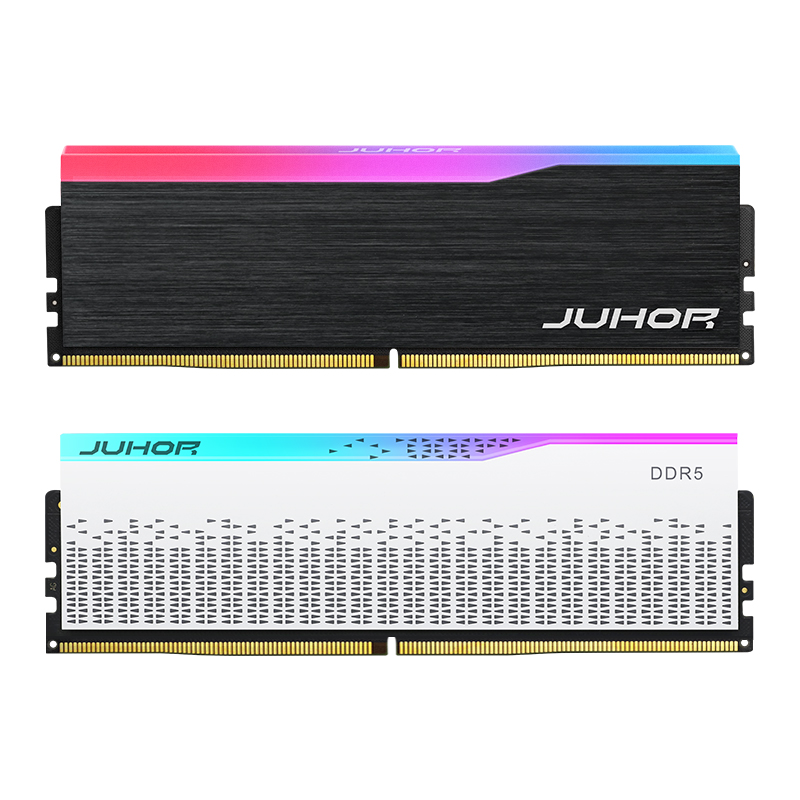
When shopping for DDR5 memory, you may have noticed numbers like CL34, CL36, or CL40. These numbers refer to CAS latency (CL), a term often discussed when evaluating memory performance. But does CAS latency really matter in DDR5? And if it does, how can it impact real-world performance? This article will break down CAS latency, DDR5 timings, and how they influence overall memory efficiency, helping you make informed decisions when selecting RAM.
CAS latency, or Column Address Strobe latency, represents the number of clock cycles a memory module takes to access a specific set of data in one of its columns and make it available to the CPU. In simple terms, it’s the time delay between a request for data and the delivery of that data. For example, DDR5 memory with a CAS latency of 34 (CL34) will take 34 clock cycles to output the requested information.
While DDR5 tends to have higher CAS latency compared to DDR4, it also operates at significantly higher frequencies. This means the actual time delay per cycle is shorter, so overall performance can still improve despite the higher CL number. Understanding CAS latency in combination with DDR5 frequency is crucial for evaluating memory performance effectively.

CAS latency is just one part of DDR5 memory timings. Other important timing parameters include:
tRCD (RAS to CAS Delay): The number of cycles between activating a row (RAS) and accessing a column (CAS) in that row.
tRP (RAS Precharge): The number of cycles needed to close one row and open another.
tRAS (Active to Precharge Delay): The minimum time a row must remain active before it can precharge for the next access.
CMD (Command Rate): The delay between memory activation and the first command sent, typically T1 or T2.
These timings together define the latency and responsiveness of the memory module. DDR5’s internal architecture, including dual 40-bit channels per DIMM, improves parallelism, which can offset higher CAS latency in practical usage.
CAS latency alone doesn’t tell the whole story. The actual time it takes for memory to respond to a CPU request depends on both CAS latency and memory frequency. For example, DDR5-5600 CL36 completes a clock cycle faster than DDR4-3200 CL16 due to its higher operating frequency, despite having a larger CAS number.
To calculate approximate real latency, you can use the formula:
Latency (ns) = (CAS Latency / Memory Frequency) × 2000
This helps illustrate that DDR5’s higher frequency can compensate for increased CAS latency, making it faster in many scenarios than older DDR4 memory.
In practice, DDR5 CAS latency affects certain workloads more than others. Applications that access memory heavily and repeatedly, like gaming, video editing, and cloud-based workloads, can benefit from lower latency. However, DDR5’s high frequency often outweighs CAS latency differences in most consumer and professional tasks.
For gamers, a DDR5 kit with slightly higher CL but faster frequency can deliver better frame rates and smoother performance. In cloud computing and AI workloads, where large datasets are processed in parallel, bandwidth and overall memory throughput often matter more than small differences in CAS latency.
Selecting DDR5 memory requires balancing frequency and CAS latency. Here are practical tips:
Match RAM with CPU: Each processor generation has an optimal memory frequency. Staying within this range ensures stability and performance.
Prioritize frequency for bandwidth-intensive tasks: For gaming and content creation, higher frequency can be more beneficial than lower CAS latency.
Lower CAS latency for latency-sensitive applications: For workloads like scientific computing or database servers, choosing RAM with lower CL can improve responsiveness.
Check motherboard compatibility: Ensure your motherboard supports the DDR5 speeds you plan to use, including XMP or EXPO profiles.
Ultimately, the best DDR5 memory depends on your use case and hardware combination.

To get the most from DDR5 RAM, consider the following:
Enable XMP/EXPO profiles: These automatically apply optimized frequency and timings.
Install in dual or quad-channel configuration: This increases bandwidth and reduces bottlenecks.
Keep memory cool: High-speed DDR5 can produce more heat, so proper airflow and cooling help maintain stability.
Monitor performance: Use benchmarking tools to verify that your selected memory delivers expected improvements.
These small optimizations can enhance DDR5 performance beyond what raw specifications suggest.
Does CAS latency matter in DDR5? Yes, but its impact is context-dependent. DDR5’s higher frequencies often mitigate the effect of higher CAS latency, especially in gaming and cloud computing environments. Understanding the relationship between CL, memory frequency, and workload type is key to choosing the right DDR5 memory. By considering these factors, you can select a memory kit that balances latency, bandwidth, and cost for your specific applications.
When looking for high-quality DDR5 memory solutions, Juhor, a trusted DDR5 supplier, also offers reliable memory solutions for advanced computing needs, ensuring both performance and stability in your systems.


4 / F, No. 18, Langkou Industrial Park, Langkou Community, Dalang Street,Shenzhen,Guangodng , China