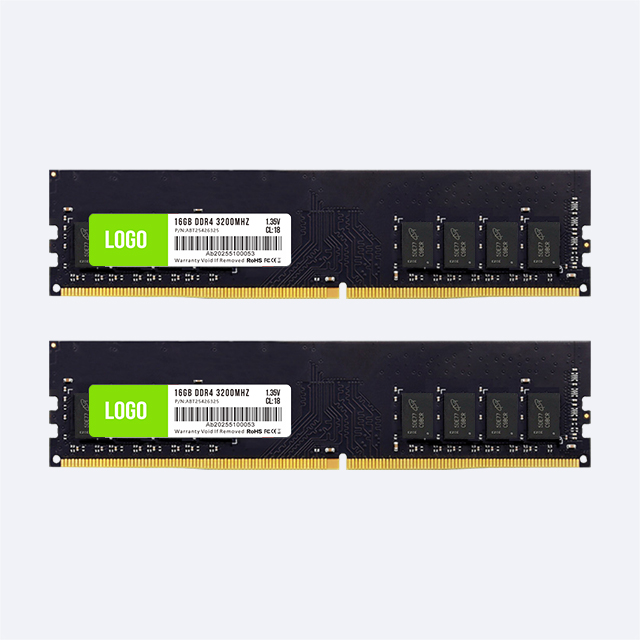
A distributor preparing a quarterly RAM order now faces a different problem from the one it had a year ago. A quote may be valid for a shorter period, an approved DDR4 part may become harder to replace, and a low spot offer may not cover the quantity or delivery window written into the customer's project.
RAM prices in 2026 are being shaped by tight DRAM supply, demand from AI and server infrastructure, and decisions by major manufacturers to direct capacity toward higher-value products. The result is not one uniform price increase. DDR4, DDR5, PC DRAM, server DRAM, contract orders, and retail kits can move at different speeds.
Market data in this article was reviewed on 24 August 2026. The outlook is a planning framework, not a promise that prices will rise or fall on a fixed date.
TrendForce raised its forecast for conventional DRAM contract prices in the first quarter of 2026 to a 90–95% quarter-over-quarter increase. By the third quarter, it expected conventional DRAM contract prices to keep rising, but at a slower 13–18% quarter-over-quarter rate as high prices met weaker consumer demand.
Slower growth is not the same as a price decline. It means the market may be moving from a sharp repricing phase into a period where buyers resist further increases while supply remains tight.
| Market Signal | 2026 Reading | Meaning for Bulk Buyers |
|---|---|---|
| DRAM contract pricing | Still rising in the third-quarter forecast, but more slowly than in early 2026 | Do not treat a lower rate of increase as a confirmed market reversal |
| PC DRAM supply | Capacity allocation toward server applications reduces supply available to PC OEMs and module makers | Confirm allocation and delivery before accepting downstream orders |
| DDR4 supply | Older platforms still need DDR4 while leading suppliers reduce attention to legacy output | Plan replacement stock by installed base rather than assuming older memory will keep getting cheaper |
| Consumer demand | High prices are limiting purchasing power in PCs and smartphones | Demand weakness may slow increases, but it does not immediately add supply |
| Large-buyer contracts | Long-term supply agreements are becoming more important for major customers | Smaller buyers need earlier forecasts, clear release schedules, and qualified alternatives |

AI accelerators use high-bandwidth memory, but HBM is not the only part of an AI system that consumes DRAM capacity. Servers also require large amounts of conventional DDR5 and other system memory. As cloud service providers and server OEMs reserve more supply, PC and consumer markets compete for a smaller share of available output.
S&P Global reported that major memory manufacturers have been directing production toward HBM, tightening conventional DRAM supply. TechInsights also noted that agentic AI is adding demand for mainstream system memory, not only HBM. This is why weaker consumer PC demand does not automatically produce cheap PC memory.
A production line is not allocated only by unit volume. Revenue per wafer, customer contracts, process technology, and long-term demand all affect what suppliers choose to make. When server DRAM and AI-related products offer better economics, conventional PC memory receives less capacity even if PC buyers still need substantial volume.
New fabrication capacity takes time to build, qualify, and ramp. Process improvements can add output, but they cannot instantly replace capacity already committed to server and AI customers.
DDR4 is mature, but maturity does not guarantee falling prices. Millions of business PCs, industrial systems, repair projects, and installed fleets cannot switch to DDR5 without changing the motherboard and often the processor. That creates continuing replacement demand.
At the same time, suppliers have more reason to focus new investment on DDR5 and server products. When DDR4 output contracts faster than the installed base retires, DDR4 can tighten even though it is an older generation. Buyers should therefore separate “old technology” from “abundant supply.”
Contract prices, spot prices, module quotations, and retail kit prices do not change on the same day. A distributor may still hold inventory purchased at an earlier cost. A module maker may have a fixed wafer allocation. A retailer may adjust only after lower-cost stock is sold.
This timing gap explains why one channel can look stable while another is already moving. It also means a single retail promotion is weak evidence for a bulk-order price trend.
DDR4 and DDR5 are not substitutes within the same motherboard. A buyer cannot respond to expensive DDR4 by purchasing DDR5 modules unless the whole target platform supports DDR5. The correct decision starts with the installed fleet and the systems scheduled for production.
| Project Type | Default Direction | Procurement Priority |
|---|---|---|
| Repairing or upgrading existing DDR4 PCs | Keep the validated DDR4 generation and form factor | Map installed models, remaining service life, and replacement volume |
| Building new mainstream PCs | Evaluate DDR5 where the selected CPU and motherboard support it | Compare total platform cost, not only module price |
| Managing a mixed corporate fleet | Maintain separate DDR4 and DDR5 demand pools | Use model-level labels and separate approved-part lists |
| Supplying repair and refurbishment channels | Retain practical DDR4 capacities and speeds based on actual returns | Avoid excess stock in uncommon specifications |
For a wider platform comparison, see the DDR4 vs DDR5 guide for bulk buyers. It separates new-PC purchases from upgrades to existing fleets.
No reliable source can assign a guaranteed month to the next decline. A durable fall would require one or more of the following changes:
Additional DRAM output reaches qualified volume rather than remaining an announced expansion.
Server and AI buyers reduce orders or release previously reserved capacity.
Supplier inventories rebuild across several reporting periods.
Spot prices weaken consistently and the decline later reaches module contracts.
PC and consumer demand falls enough to create excess inventory instead of merely slowing price increases.
Buyers should watch direction and duration. One flat month after a steep increase is price stabilization at a high level, not a return to the previous cost base. A falling spot quote also has limited value if the supplier cannot cover the required quantity, specification, and delivery date.
Build separate forecasts for DDR4 desktop DIMMs, DDR4 laptop SODIMMs, DDR5 desktop DIMMs, and any server-specific modules. Within each group, separate confirmed customer orders from forecast demand and service stock.
This prevents a high-volume headline such as “32GB RAM” from hiding incompatible products. Capacity alone does not identify the generation, form factor, speed, ECC requirement, or module arrangement.
Share a longer forecast for planning, but identify which weeks and quantities are firm. Ask the supplier which volume is allocated, which volume remains indicative, and how long the quotation is valid. This is more useful than requesting one price for an entire quarter without release dates.
Qualify a second capacity, speed, or product series only when the target platform supports it. An alternative should have its own sample approval and compatibility record. Do not wait until the original part is unavailable to begin motherboard testing.
The purchase order should state memory generation, capacity per module, rated speed, DIMM or SODIMM, ECC status, voltage where required, kit arrangement, label, packaging, and acceptable substitutions. For a repeat program, add the approved product code and revision-control expectations.
A lower quote can cost more if it has an uncertain ship date, an unapproved substitution, or a short claim window. Compare unit cost together with allocation status, delivery schedule, inspection terms, packaging, payment terms, and the process for handling incompatible or defective modules.
Monitor contract-price forecasts, spot direction, supplier lead times, customer order intake, and your own weeks of stock. Use the same review date each month. A repeatable dashboard is more reliable than reacting to daily retail headlines.

AI and server demand is absorbing more DRAM capacity, while manufacturers favor server, HBM, and newer products. PC and legacy-memory buyers are competing for the remaining conventional DRAM supply.
The installed base still needs DDR4, but suppliers have less reason to expand legacy production. If output falls faster than replacement demand, the price can rise.
No. A smaller quarter-over-quarter increase means prices are still rising, just at a slower rate. Buyers need several periods of declining prices and improving supply before calling it a reversal.
Cover confirmed projects and critical service stock first. Keep forecast demand in scheduled releases rather than buying every possible module at once. Waiting is risky when the required part is platform-specific and the delivery date is fixed.
Not within a DDR4 motherboard. DDR4 and DDR5 have different electrical and physical designs. Moving to DDR5 requires a compatible platform and should be evaluated as a system change.
Spot pricing covers transactions available in the near market and can move quickly. Contract pricing applies to negotiated supply over an agreed period. Neither should be compared without checking quantity, specification, timing, and commercial terms.
Provide generation, DIMM or SODIMM, capacity, rated speed, ECC requirement, quantity, release schedule, destination, packaging, branding, sample requirement, and target delivery date.
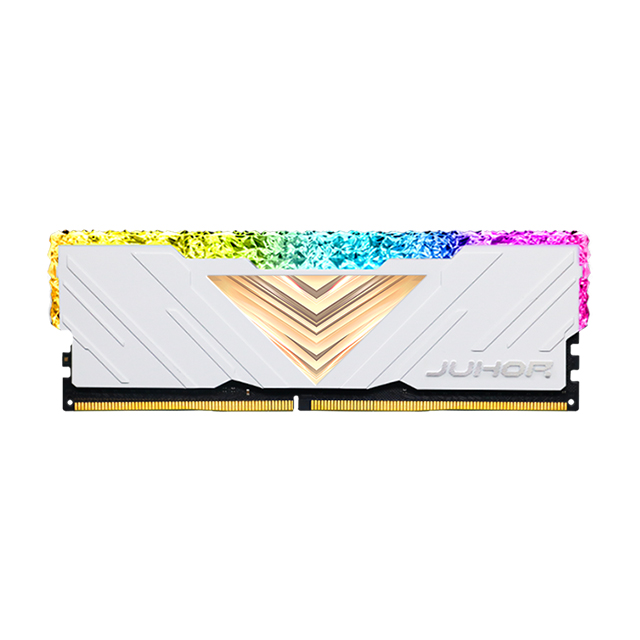
JUHOR maintains separate product categories for DDR4 desktop memory and DDR5 desktop memory. Buyers sourcing notebook upgrades can review the laptop memory range.
Published catalog combinations should be treated as a starting point. Current availability, exact capacity and frequency combinations, voltage, packaging, matched-kit requirements, minimum order quantity, quotation validity, and lead time should be confirmed for each order.
For a useful quotation, send JUHOR the target platform or motherboard list, module type, capacity per module, total quantity, monthly release plan, required delivery date, branding or packaging needs, and sample quantity. If the project accepts alternatives, list the fields that may change and the fields that must remain fixed.


4 / F, No. 18, Langkou Industrial Park, Langkou Community, Dalang Street,Shenzhen,Guangodng , China